
What Does “Ransomware” Mean?
Quick Definition
Ransomware is harmful software that prevents users from accessing their files, devices, or systems until a ransom is paid to the attacker.
The word combines:
- Ransom: Money demanded for releasing something
- Software: A computer program
Together, ransomware means software created to hold digital information hostage.
What It Usually Means in Cybersecurity
In cybersecurity, ransomware refers to a type of malware attack where criminals attempt to:
- Encrypt files
- Lock computer systems
- Steal sensitive information
- Demand payment
- Threaten to release stolen data
The attacker may provide instructions telling victims how to pay, often requesting cryptocurrency because it is harder to trace.
What Tone Does It Convey?
Ransomware is a serious cybersecurity term.
It usually conveys:
- Negative: Associated with cybercrime and damage
- Serious: Often linked to major security incidents
- Technical: Used in cybersecurity discussions
- Warning-related: Often used when explaining online risks
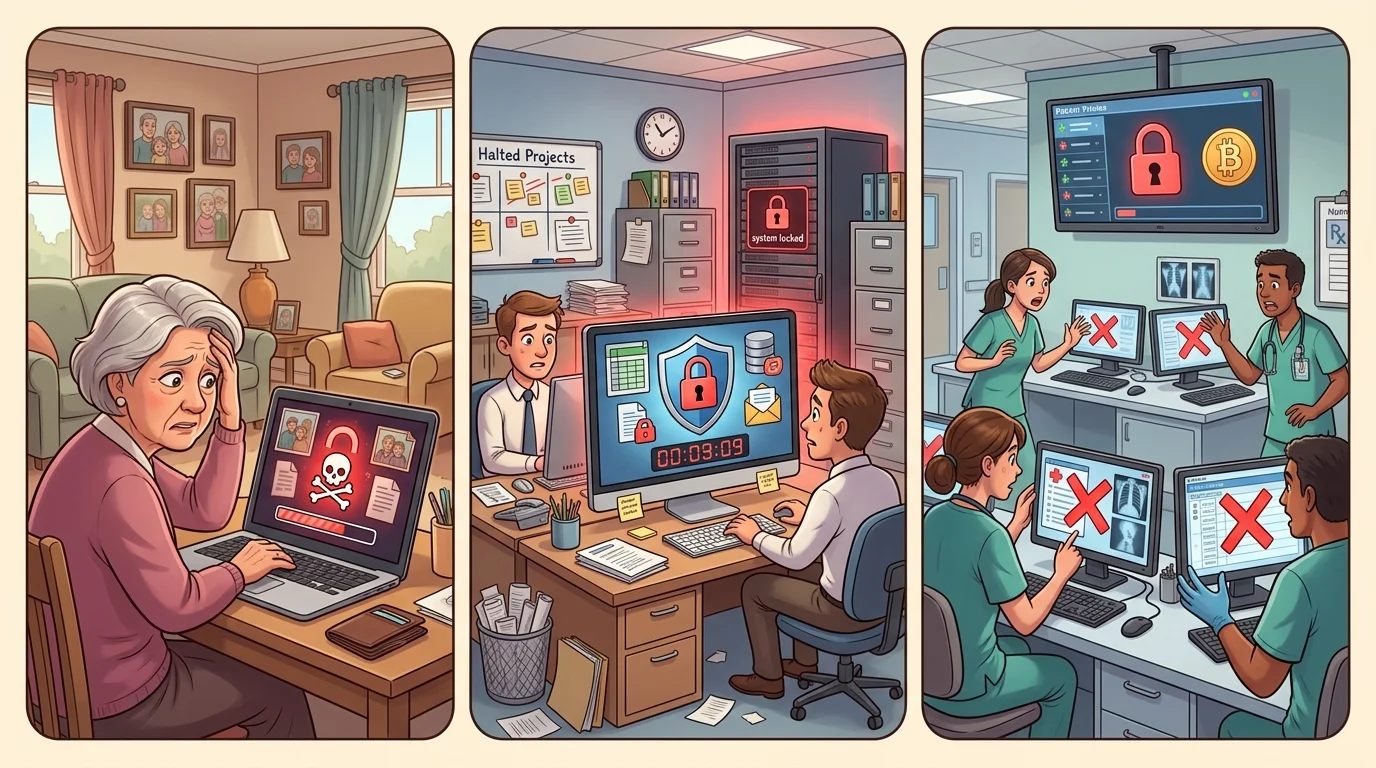
What Does Ransomware Mean in Different Contexts?
Ransomware in Computers
On computers, ransomware may lock files such as:
- Documents
- Photos
- Videos
- Work files
- Databases
Victims may see a message demanding payment to regain access.
Example:
A user opens a suspicious email attachment, and their files become encrypted. A message appears demanding money for the decryption key.
Ransomware in Businesses
Businesses are common targets because they often store valuable data.
Attackers may target:
- Customer information
- Financial records
- Internal systems
- Company databases
A ransomware attack can interrupt operations and cause financial losses.
Ransomware on Social Media
On platforms like social media, people often discuss ransomware after major attacks or security news.
Users may share:
- Cybersecurity warnings
- Scam alerts
- Data breach information
Ransomware in Gaming
Gamers can also be targeted through:
- Fake game downloads
- Malicious mods
- Suspicious files
- Account-related scams
Ransomware in Online Communities
Cybersecurity forums and communities often discuss ransomware samples, prevention methods, and attack reports.
Origin and History of Ransomware Meaning
The concept of ransomware dates back decades. One of the earliest known ransomware examples appeared in 1989 with the AIDS Trojan, which used a form of file encryption and demanded payment.
Modern ransomware became much more advanced with improvements in encryption technology and anonymous payment methods.
Over time, attackers developed new strategies, including:
- Encrypting large networks
- Stealing data before locking systems
- Threatening public data leaks
The exact methods continue to change as cybersecurity professionals develop new defenses.
How People Actually Use the Term “Ransomware”
Most people use the word ransomware when discussing cybersecurity problems, news reports, or online safety.
You will often see it in situations involving:
- Company cyberattacks
- Data protection
- Computer security
- Online scams
When People Use It Correctly
Example:
“The company suffered a ransomware attack that affected its internal systems.”
Meaning:
A malicious program caused a security problem.
When People Use It Incorrectly
Not every computer problem is ransomware.
For example:
- A slow computer is not automatically ransomware.
- A normal software error is not ransomware.
- A forgotten password is not ransomware.
Ransomware specifically involves malicious software and usually some form of digital extortion.
Real Examples of Ransomware in Conversations
Example 1: Personal Computer
Person A: Why can’t you open your files?
Person B: My computer may have ransomware.
Meaning: A harmful program may have blocked access to files.
Example 2: Workplace Security
Person A: Why is the office system offline?
Person B: The company is dealing with a ransomware attack.
Meaning: A cyberattack affected business systems.
Example 3: Cybersecurity Discussion
Person A: How do hackers make money?
Person B: Some use ransomware to demand payments.
Meaning: Criminals use malware for financial gain.
Example 4: Email Warning
Person A: Should I open this strange attachment?
Person B: No, it could contain ransomware.
Meaning: The file may contain harmful software.
Example 5: Gaming Example
Person A: Why did my game files disappear?
Person B: Check if malware or ransomware affected your system.
Meaning: A security issue may have damaged files.
Example 6: Business News
Person A: Why is everyone talking about this company?
Person B: They were hit by ransomware.
Meaning: The company experienced a cyberattack.
Example 7: Data Protection
Person A: Why do companies back up files?
Person B: Backups help recover after ransomware attacks.
Meaning: Backups can reduce damage.
Example 8: Security Advice
Person A: How can I avoid ransomware?
Person B: Update software and avoid suspicious downloads.
Meaning: Safe online habits reduce risk.
Common Mistakes and Misunderstandings
Mistake 1: Thinking Ransomware Is Just a Virus
Ransomware is a type of malware, but it has a specific purpose: demanding payment.
A virus may damage files, while ransomware usually tries to control access and create financial pressure.
Mistake 2: Believing Only Big Companies Are Targeted
Individuals can also become victims through:
- Fake downloads
- Phishing emails
- Unsafe websites
Mistake 3: Thinking Paying Always Fixes Everything
Paying does not guarantee:
- Files will be restored
- Data will not be leaked
- Attackers will not return
Mistake 4: Confusing Ransomware With Regular Scams
Ransomware usually involves software that affects devices or data, not just a fake message asking for money.
Similar Cybersecurity Terms and Related Words
| Term | Meaning | Difference |
|---|---|---|
| Malware | Harmful software | General category that includes ransomware |
| Virus | Program that spreads and damages systems | A type of malware |
| Phishing | Fake messages used to steal information | Often used to deliver ransomware |
| Spyware | Software that secretly monitors users | Focuses on spying |
| Trojan | Malware disguised as legitimate software | Uses deception to enter systems |
| Encryption | Process of protecting data | Ransomware abuses encryption |
| Data breach | Unauthorized access to information | May happen with or without ransomware |
| Cyberattack | Digital attack against systems | Broader term |
Is Ransomware Positive, Negative, or Neutral?
Ransomware is negative.
It is associated with:
- Cybercrime
- Data loss
- Financial damage
- Security threats
The word itself is a technical term, but it almost always appears in negative situations.
Should You Use the Term Ransomware?
Use It If:
- You are discussing cybersecurity
- You are explaining a malware attack
- You are talking about online safety
Avoid Using It If:
- You are describing normal computer problems
- You are unsure whether malware is involved
- You are making claims without evidence
Using the term correctly helps avoid confusion.
Related posts:
 Amature Meaning Explained Powerful Definition, Common Mistakes, Examples & Important Facts You Need to Know 2026
 Layaway Meaning Revealed Essential Guide to How It Works & Smart Shopping Tips 2026
 Amazing Commute Meaning What Does Commute Mean? 2026
 Atherosclerosis Meaning Explained The Best Guide to Causes, Symptoms & Treatment 2026