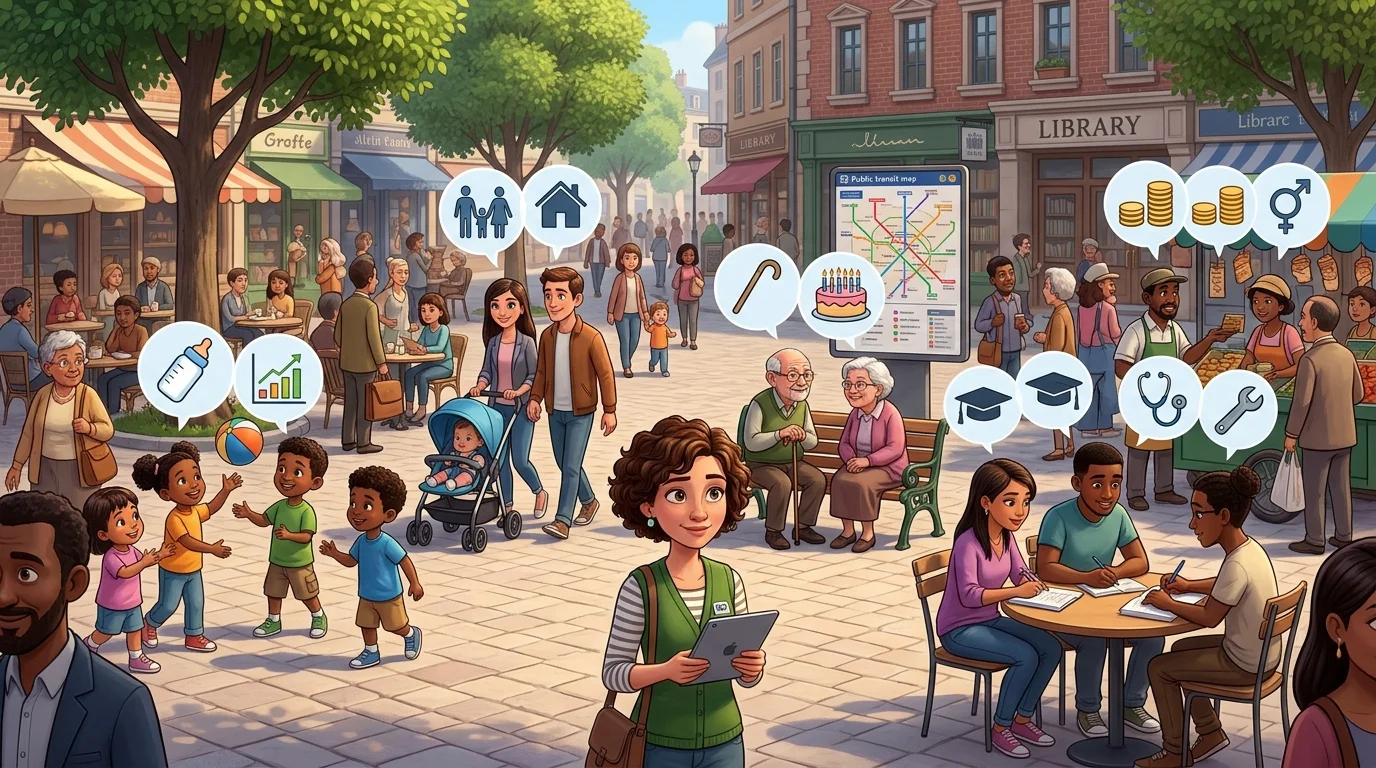
Demographics Meaning What Does Demographics Mean?
Quick Definition
Demographics are measurable characteristics of a population or group of people.
Simple meaning:
Demographics describe who people are based on statistics and data.
What It Usually Means
The term demographics commonly refers to information such as:
- Age
- Gender
- Location
- Income
- Education
- Occupation
- Family status
Literal Meaning of Demographics
The word comes from:
- Demos = people or population
- Graphy = writing or measurement
Together, demographics means the study or measurement of people.
What Tone Does It Convey?
The word demographics is usually:
Professional:
Common in business and research.
Neutral:
It describes data without judgment.
Analytical:
Connected to statistics and studies.
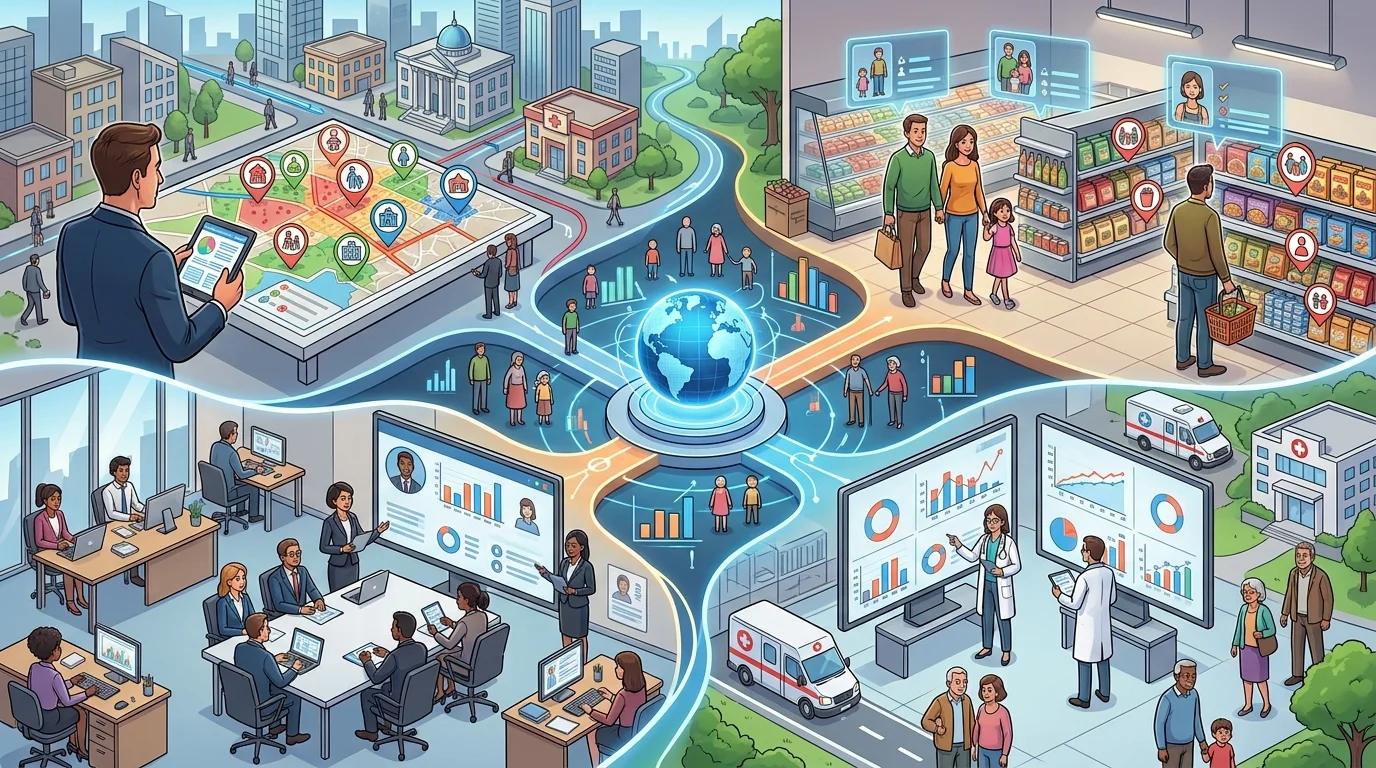
What Does Demographics Mean in Different Contexts?
Business and Marketing
In marketing, demographics help companies understand their customers.
Examples:
A brand may study:
- Customer age
- Location
- Income range
- Interests
This helps businesses create better products and advertising.
Social Media
Platforms use demographic data to understand audiences.
Examples:
- Audience age groups
- User locations
- Gender breakdowns
Creators and brands use this information to reach the right people.
Research
Researchers use demographics to study populations.
Examples:
- Health studies
- Social research
- Economic reports
Government
Governments use demographic information for:
- Planning schools
- Healthcare services
- Transportation
- Public programs
Online Analytics
Websites may analyze demographics to understand visitors.
Example:
“Most of our visitors are between 18 and 34 years old.”
Meaning:
That is part of the audience demographics.
Origin and History of Demographics
The concept of studying populations has existed for centuries, but the modern use of demographics developed through statistics, population studies, and social science research.
As governments and organizations collected more data about populations, demographics became an important tool for understanding social patterns.
Today, demographics are widely used in:
- Marketing
- Economics
- Sociology
- Public planning
- Business strategy
How People Actually Use Demographics
People use demographics when they need to understand a group of people.
You’ll often see the term in:
- Marketing reports
- Surveys
- Research papers
- Business plans
- Analytics dashboards
When to Use Demographics
Use the word when talking about:
- Population data
- Audience information
- Customer characteristics
- Social statistics
Example:
“The company analyzed customer demographics before launching the product.”
When Not to Use Demographics
Avoid using demographics when you mean:
- Personal opinions
- Individual preferences
- Personality traits
Demographics describe measurable characteristics, not everything about a person.
Real Examples of Demographics in Conversations
Example 1: Marketing
Person A:
“Who is this product designed for?”
Person B:
“We studied the demographics first.”
Meaning:
They looked at customer information.
Why it was used:
To understand the target audience.
Example 2: Social Media
Person A:
“What kind of followers do you have?”
Person B:
“My demographics are mostly young adults.”
Meaning:
They are describing their audience.
Why it was used:
To explain audience data.
Example 3: Business
Person A:
“Why did the company change its advertising?”
Person B:
“The demographics showed a different customer group.”
Meaning:
Customer data influenced the decision.
Why it was used:
For business planning.
Example 4: Research
Person A:
“What information was collected?”
Person B:
“Basic demographics like age and location.”
Meaning:
Researchers collected population details.
Why it was used:
To describe participants.
Example 5: Website Analytics
Person A:
“Who visits your website?”
Person B:
“The demographics show visitors from different age groups.”
Meaning:
Analytics provide audience details.
Why it was used:
To understand users.
Common Mistakes and Misunderstandings
Mistake 1: Thinking Demographics Mean Personality
Demographics describe facts like age and location, not personality.
Mistake 2: Confusing Demographics With Interests
Interests are usually called psychographics.
Example:
Demographics:
Age, income, location
Psychographics:
Values, hobbies, lifestyle
Mistake 3: Thinking Demographics Only Mean Age
Age is one part, but demographics include many characteristics.
Mistake 4: Assuming Demographic Data Describes Everyone
Demographics show patterns in groups, not every individual.
Similar Terms and Related Words
| Term | Meaning | Difference |
|---|---|---|
| Audience | Group of people being reached | Broader than demographics |
| Population | All people in an area or group | Larger concept |
| Statistics | Numerical information | Includes many types of data |
| Psychographics | Lifestyle and personality data | Focuses on attitudes |
| Analytics | Data analysis | Broader data study |
| Census | Official population count | A specific data collection method |
| Target Market | Customers a business wants to reach | Business-focused group |
| Segmentation | Dividing groups into categories | Uses demographics and other data |
Is Demographics Positive, Negative, or Neutral?
Demographics is neutral.
The word simply describes information about people.
Positive uses:
- Better customer understanding
- Improved planning
- Useful research
Negative situations may happen if demographic data is used unfairly or incorrectly.
Should You Use Demographics?
Use demographics if:
- You are discussing population data
- You are analyzing customers
- You are explaining audience information
Avoid using it if:
- You are describing emotions
- You are describing personality
- You are talking about one person’s preferences
Related posts:
 What Does “The Hierophant Meaning” Mean? Powerful Tarot Symbolism, Spiritual Insight & Life Guidance 2026
 Hymen Meaning Made Easy Complete Guide to Understanding Facts, Myths & Body Anatomy 2026
 Beautiful Anklet Meaning What Does an Anklet Symbolize? 2026
 Emancipated Minor Meaning The Best Guide to Rights, Rules & Examples 2026