

Commute Meaning What Does Commute Mean?
Quick Definition
The commute meaning is to travel regularly between home and work, school, or another place as part of a daily routine.
Literal Meaning
As a verb, commute means making a regular journey.
As a noun, commute refers to the journey itself.
Examples:
- “I commute by train every day.”
- “My commute takes 40 minutes.”
What Does It Usually Mean?
In everyday English, commute usually refers to:
- Traveling to work
- Going to school or college
- Daily transportation between home and another regular destination
What Tone Does It Convey?
The word is generally:
- Neutral
- Practical
- Everyday
- Professional
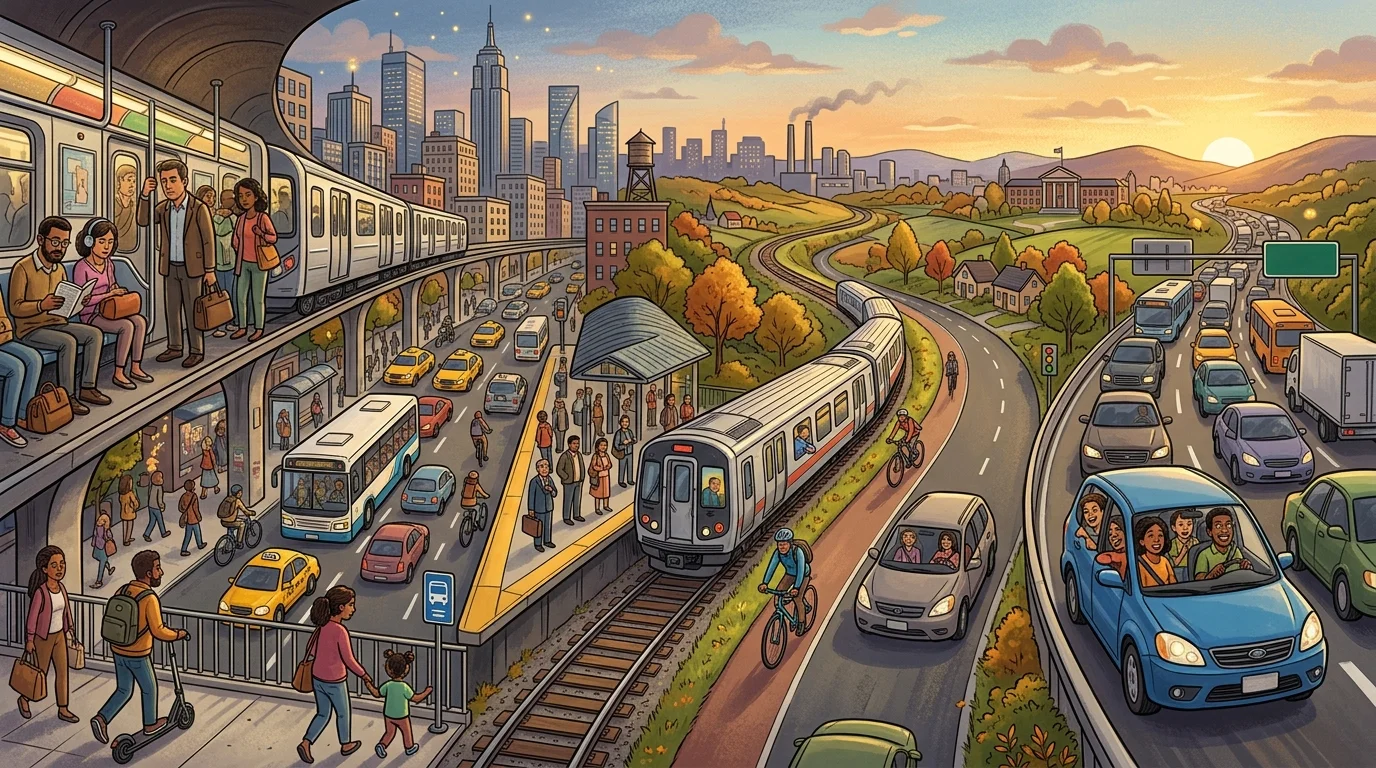
Commute Meaning in Different Contexts
Work
This is the most common use of the word.
Example:
“She commutes to the office every weekday.”
School or College
Students also commute.
Example:
“He commutes to university by bus.”
Remote Work
People who work from home often say they don’t have a commute.
Example:
“Working remotely eliminated my daily commute.”
Legal Meaning
In legal contexts, commute has a different meaning.
It can mean to reduce the severity of a criminal sentence or punishment.
Example:
“The governor commuted the prisoner’s sentence.”
This meaning is much less common in everyday conversation.
Origin and History of Commute
The word commute comes from the Latin commutare, meaning “to change” or “exchange.”
In the 19th century, the term became associated with transportation, particularly for people making regular trips between home and work. Over time, commute evolved into the standard English word for a routine journey.
How People Actually Use the Commute Meaning
People commonly use commute when discussing:
- Travel time
- Traffic
- Public transportation
- Work-life balance
- Fuel costs
- Remote work
- Daily routines
You’ll often hear phrases like:
- Long commute
- Short commute
- Daily commute
- Morning commute
- Evening commute
- Commute to work
Real Examples of Commute in Conversations
Example 1
Person A: How long is your commute?
Person B: About 30 minutes by train.
Meaning: The time it takes to travel to work.
Example 2
“I commute to work every weekday.”
Meaning: I travel regularly to my workplace.
Example 3
“She has a two-hour commute.”
Meaning: Her daily journey is very long.
Example 4
“He bikes to work instead of driving.”
Meaning: Cycling is his daily commute.
Example 5
“My commute is much shorter after moving.”
Meaning: The regular trip now takes less time.
Example 6
“They commute together every morning.”
Meaning: They travel to work together.
Example 7
“I listen to podcasts during my commute.”
Meaning: While traveling to work.
Example 8
“Remote work eliminated my commute.”
Meaning: I no longer travel to work.
Example 9
“The morning commute was delayed because of traffic.”
Meaning: Daily travel took longer than usual.
Example 10
“The governor commuted the prisoner’s sentence.”
Meaning: Reduced the legal punishment.
Common Mistakes and Misunderstandings
Here are some common misconceptions:
- A commute is usually regular. A one-time trip isn’t normally called a commute.
- Commute isn’t limited to cars. You can commute by train, bus, bicycle, subway, ferry, or on foot.
- The legal meaning is separate. In law, “commute” means reducing a sentence, not traveling.
Similar Words and Related Terms
| Word | Meaning | Difference |
|---|---|---|
| Commute | Regular journey between home and work or school | Routine travel |
| Travel | Move from one place to another | General term |
| Journey | Trip from one place to another | Any distance |
| Trip | Visit or travel | Often temporary |
| Drive | Travel by car | Specific method |
| Ride | Travel in or on a vehicle | Method of transportation |
| Transit | Public transportation | Transportation system |
| Carpool | Share a ride | Group commuting |
| Voyage | Long journey, usually by sea | Less common |
| Expedition | Purposeful journey | Specialized travel |
Is the Commute Meaning Positive, Negative, or Neutral?
The commute meaning is generally neutral.
Whether a commute is considered positive or negative depends on the experience.
A commute may be:
Positive
- Short
- Relaxing
- Scenic
- Convenient
Negative
- Long
- Stressful
- Expensive
- Traffic-heavy
Should You Use the Word Commute?
Use commute when referring to:
- Regular travel to work.
- Daily trips to school.
- Routine transportation.
- Discussions about traffic or public transit.
Avoid using it for vacations or one-time journeys, where trip or travel is usually more appropriate.
Related posts:
 What Does “The Hierophant Meaning” Mean? Powerful Tarot Symbolism, Spiritual Insight & Life Guidance 2026
 Nolan Name Meaning Explained Amazing Guide to Origin, History, Personality & Symbolism 2026
 Beautiful Charlotte Meaning What Does Charlotte Mean, Origin, Personality & More 2026
 Top or Bottom Meaning The Best Ultimate Guide to What “Top” and “Bottom” Mean 2026