
High Creatinine Meaning What Does High Creatinine Mean?
Quick Definition
High creatinine refers to a blood creatinine level above the normal reference range, which may indicate reduced kidney function or another factor affecting creatinine levels.
What Is Creatinine?
Creatinine is a waste product created during the normal breakdown of creatine, a substance that helps supply energy to your muscles.
Your kidneys normally:
- Filter creatinine from the blood.
- Remove it through urine.
- Keep blood creatinine within a healthy range.
When kidney filtration decreases, creatinine levels may rise.
What Does a High Creatinine Result Suggest?
A high result may indicate:
- Reduced kidney function.
- Temporary dehydration.
- Certain medications affecting kidney function.
- Recent intense physical exercise.
- Higher muscle mass than average.
- Other medical conditions.
Your healthcare provider will often consider your estimated glomerular filtration rate (eGFR), urine tests, medical history, and repeat testing before making a diagnosis.
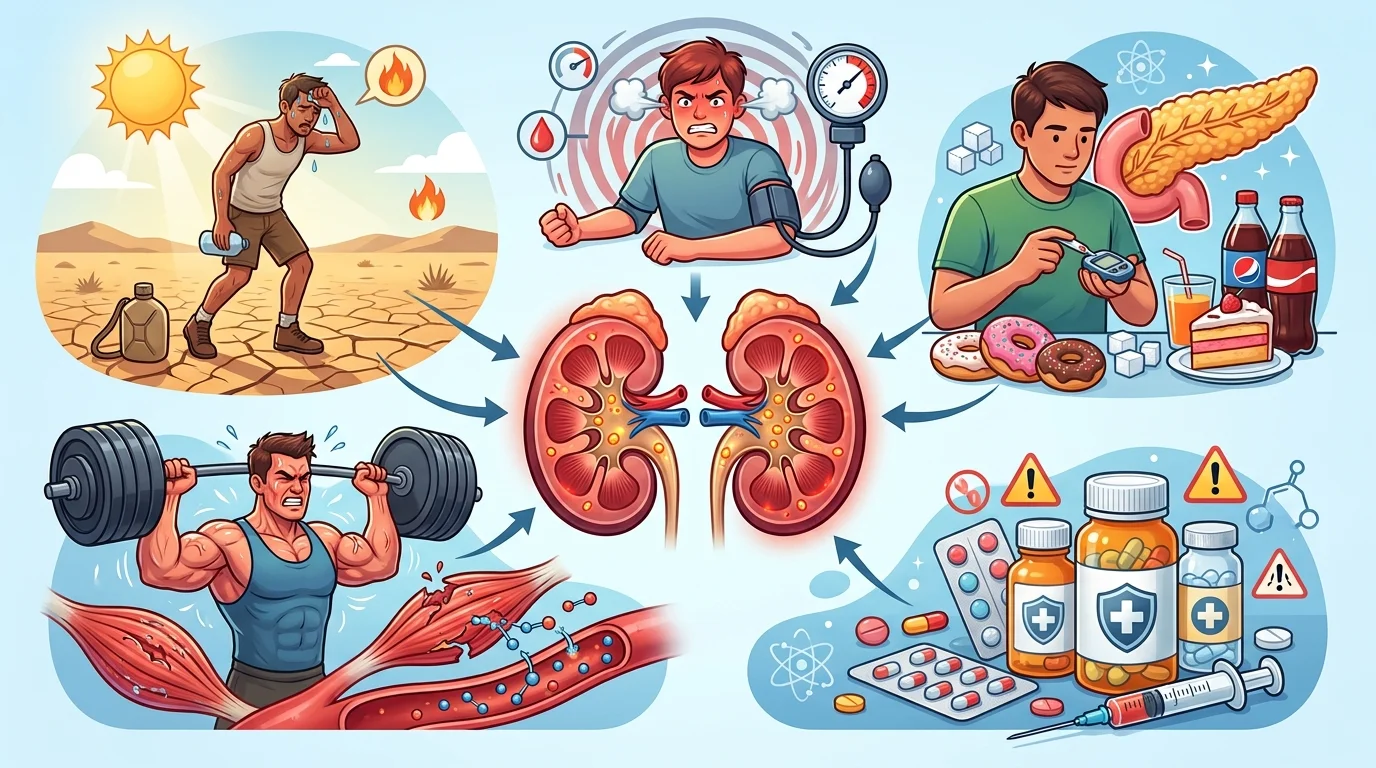
Common Causes of High Creatinine
Kidney Disease
Chronic kidney disease is one possible cause of persistently elevated creatinine because damaged kidneys filter waste less effectively.
Dehydration
Not drinking enough fluids can temporarily increase creatinine levels by reducing blood flow to the kidneys.
Intense Exercise
Strenuous exercise can temporarily increase creatinine because muscles produce more of it during heavy activity.
Certain Medications
Some medicines may increase creatinine or affect kidney function. Never stop prescribed medication without speaking to your healthcare provider.
Urinary Tract Blockage
Conditions such as kidney stones or an enlarged prostate may reduce urine flow and affect kidney function.
High Muscle Mass
People with greater muscle mass naturally produce more creatinine, which may result in slightly higher blood levels.
Symptoms Associated With High Creatinine
High creatinine itself usually doesn’t cause symptoms.
If an underlying kidney problem is present, symptoms may include:
- Fatigue
- Swelling in the legs, ankles, or feet
- Changes in urination
- Shortness of breath
- Nausea
- Poor appetite
- Difficulty concentrating
- High blood pressure
Some people have no symptoms at all, especially in the early stages of kidney disease.
How High Creatinine Is Diagnosed
Doctors commonly evaluate kidney function using:
Blood Creatinine Test
Measures the amount of creatinine in your bloodstream.
eGFR (Estimated Glomerular Filtration Rate)
Calculates how efficiently your kidneys filter waste using creatinine and other factors.
Urine Tests
Urine testing can help detect protein, blood, or other signs of kidney problems.
Additional Tests
Depending on your situation, your healthcare provider may recommend:
- Blood urea nitrogen (BUN)
- Kidney imaging
- Blood pressure evaluation
- Additional laboratory tests
How People Manage High Creatinine
Treatment depends on the underlying cause.
Possible approaches include:
- Treating dehydration.
- Managing blood pressure or diabetes if present.
- Adjusting medications under medical supervision.
- Treating urinary blockages.
- Monitoring kidney function over time.
- Following a kidney-friendly diet if recommended.
Treatment varies from person to person.
Tips for Supporting Kidney Health
Healthy habits that may support kidney function include:
- Drinking enough water unless advised otherwise.
- Managing blood pressure.
- Controlling blood sugar if you have diabetes.
- Eating a balanced diet.
- Exercising regularly.
- Avoiding smoking.
- Limiting unnecessary use of certain pain relievers if recommended by your healthcare provider.
- Attending regular medical checkups.
Always follow advice specific to your medical condition.
Real-Life Examples of High Creatinine Meaning
Example 1
A blood test shows slightly elevated creatinine after a marathon.
Meaning: Intense exercise may temporarily raise creatinine.
Example 2
Someone becomes dehydrated after several days of illness.
Meaning: Reduced fluid levels can increase creatinine.
Example 3
A routine physical reveals persistently high creatinine.
Meaning: Further testing may be needed to evaluate kidney function.
Example 4
A patient with diabetes has elevated creatinine during routine monitoring.
Meaning: Kidney health should be assessed because diabetes can affect kidney function.
Example 5
A person with high muscle mass has mildly elevated creatinine but normal kidney function.
Meaning: Higher muscle mass may influence creatinine levels.
Common Misunderstandings About High Creatinine Meaning
Many people misunderstand high creatinine.
Common misconceptions include:
- Thinking high creatinine always means kidney failure.
- Assuming one abnormal result confirms kidney disease.
- Believing creatinine alone diagnoses kidney conditions.
- Ignoring temporary causes like dehydration or strenuous exercise.
Doctors interpret creatinine together with other tests and your overall health.
Related Medical Terms
| Term | Meaning | Difference |
|---|---|---|
| Creatinine | Muscle waste product | Substance being measured |
| eGFR | Kidney filtration estimate | Measures kidney function |
| BUN | Blood urea nitrogen | Another kidney-related blood test |
| Kidney Function | How well kidneys filter waste | Broader concept |
| Chronic Kidney Disease | Long-term kidney damage | Possible cause of high creatinine |
| Acute Kidney Injury | Sudden decline in kidney function | Can rapidly raise creatinine |
| Proteinuria | Protein in the urine | Possible sign of kidney damage |
| Dialysis | Artificial blood filtration | Used in severe kidney failure |
| Dehydration | Low body fluid levels | Temporary cause of high creatinine |
| Creatinine Clearance | Measurement of kidney filtering ability | Related kidney function test |
Is High Creatinine Always Serious?
Not necessarily.
A mildly elevated creatinine level may result from:
- Dehydration
- Recent exercise
- Certain medications
- Increased muscle mass
However, persistent or significantly elevated creatinine should always be evaluated by a healthcare provider because it may indicate an underlying kidney problem.
Should You Be Concerned About High Creatinine?
You should contact your healthcare provider if:
- Your creatinine remains elevated.
- You have symptoms of kidney problems.
- Your eGFR is low.
- You have diabetes or high blood pressure.
- Your doctor recommends additional testing.
Avoid trying to interpret laboratory results without professional guidance.
Related posts:
 What Does “The Hierophant Meaning” Mean? Powerful Tarot Symbolism, Spiritual Insight & Life Guidance 2026
 Nolan Name Meaning Explained Amazing Guide to Origin, History, Personality & Symbolism 2026
 Beautiful Charlotte Meaning What Does Charlotte Mean, Origin, Personality & More 2026
 Clasp Meaning Explained The Best Guide to Its Definition, Uses & Examples 2026