Clasp Meaning Definition and Explanation
Quick Definition
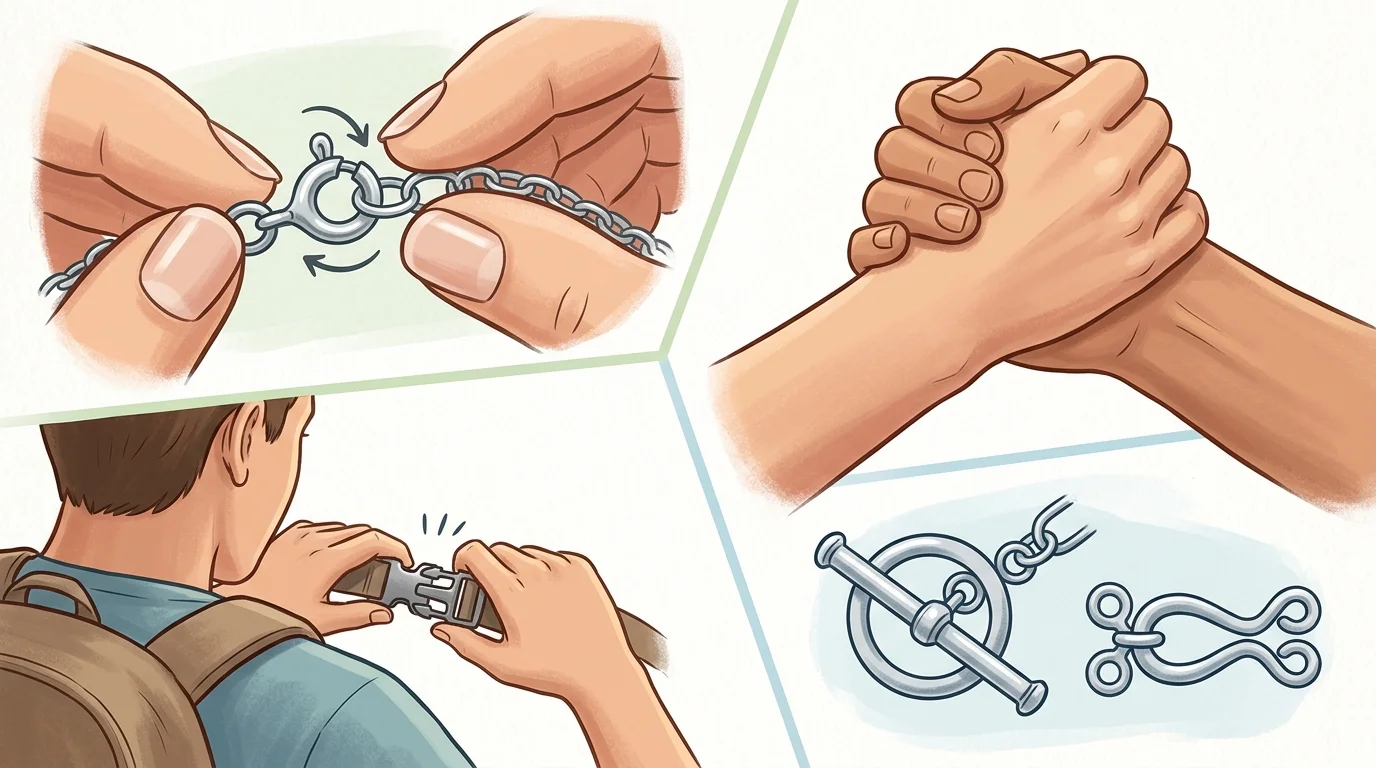
Clasp means either:
- A fastening device that secures two parts together.
- To hold something tightly, especially with your hands or arms.
What Does Clasp Usually Mean?
As a noun, a clasp is commonly found on:
- Necklaces.
- Bracelets.
- Watches.
- Handbags.
- Belts.
- Purses.
- Lockets.
As a verb, clasp means:
- Holding someone’s hand.
- Wrapping your arms around someone.
- Gripping an object firmly.
- Joining your hands together.
What Tone Does It Convey?
The tone depends on the context.
As a verb, clasp often suggests:
- Affection.
- Comfort.
- Love.
- Support.
- Determination.
- Prayer.
As a noun, it’s simply a practical term for a fastening mechanism.
Clasp Meaning in Different Contexts
Jewelry
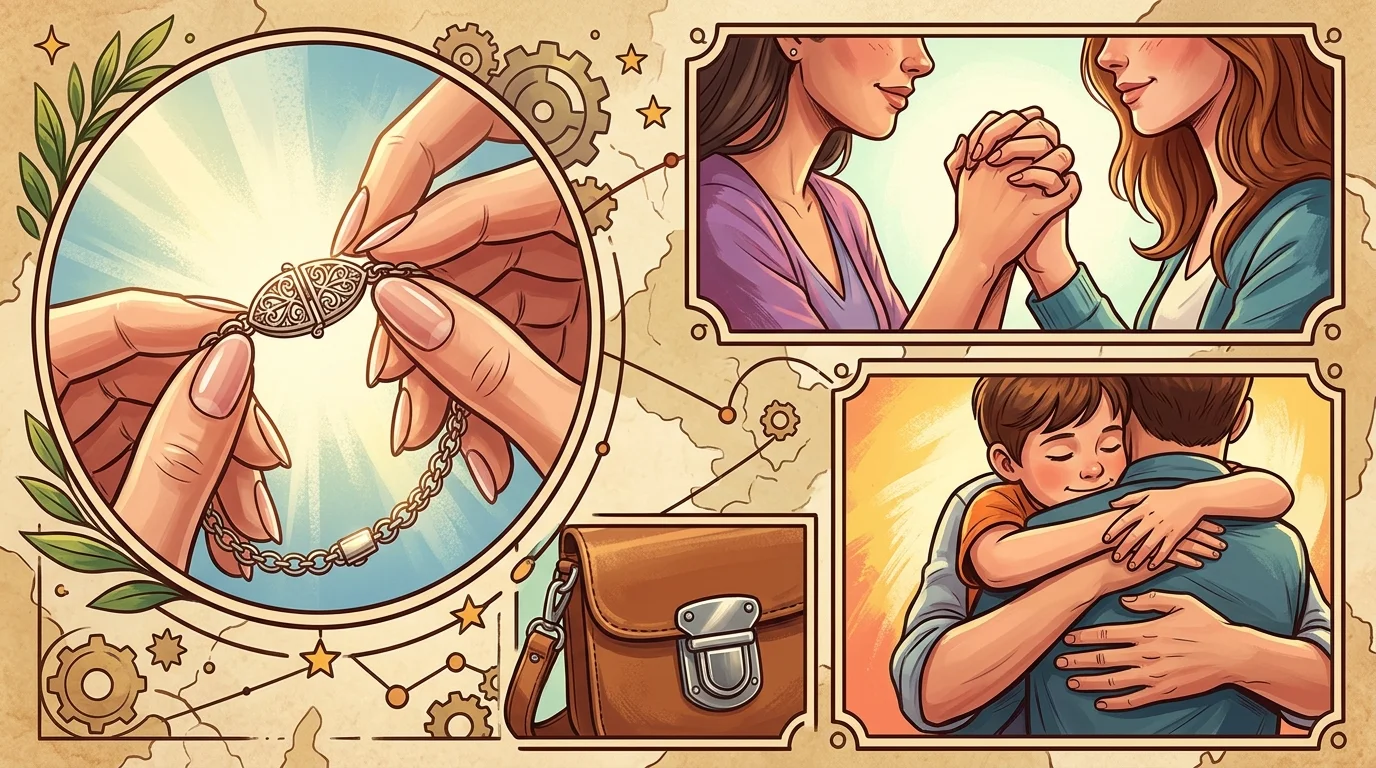
A clasp is the fastening that keeps a necklace, bracelet, or chain securely closed.
Example:
“The necklace has a lobster clasp.”
Clothing and Accessories
Many bags, belts, purses, and wallets use clasps to stay closed.
Literature
Writers often use clasp to describe emotional gestures.
Example:
“He clasped her hand before leaving.”
Everyday Conversation
People use clasp to describe holding something tightly.
Example:
“She clasped the railing.”
Religious Context
The phrase clasped hands often refers to praying.
Example:
“He clasped his hands in prayer.”
Sports and Celebrations
Athletes may clasp hands after a victory as a sign of respect or teamwork.
Origin and History of Clasp
The word clasp comes from Middle English and has Germanic origins. It has been used for centuries to describe both the act of gripping something firmly and the fastening devices used to secure clothing, jewelry, and other objects.
Over time, the word expanded from describing physical fasteners to also expressing emotional actions, such as clasping someone’s hand in friendship or embracing a loved one.
How People Actually Use Clasp
Most people use clasp in two main ways.
As a noun:
- Talking about jewelry.
- Describing accessories.
- Explaining how something fastens.
As a verb:
- Holding someone’s hand.
- Hugging someone.
- Gripping an object.
- Folding hands together.
When to Use It
Use clasp when referring to:
- Jewelry fasteners.
- Holding something firmly.
- Emotional gestures.
- Joining hands.
When Not to Use It
Avoid using clasp when:
- A lighter grip is intended.
- You simply mean “touch.”
- Another word like “hold” or “grab” is clearer.
Real Examples of Clasp in Conversations
Example 1
Person A: My bracelet keeps falling off.
Person B: The clasp might be broken.
Meaning: The fastener is damaged.
Why it was used: Jewelry discussion.
Example 2
Person A: She looked nervous.
Person B: She clasped her hands together.
Meaning: She held her hands tightly.
Why it was used: Describing body language.
Example 3
Person A: The necklace won’t stay on.
Person B: Check the clasp.
Meaning: Inspect the fastener.
Why it was used: Solving a problem.
Example 4
Person A: He hugged his grandmother.
Person B: He clasped her tightly.
Meaning: Held her closely.
Why it was used: Showing affection.
Example 5
Person A: What kind of clasp does this watch have?
Person B: A folding clasp.
Meaning: Type of fastening.
Why it was used: Product description.
Example 6
Person A: She was praying quietly.
Person B: Her hands were clasped.
Meaning: Folded together.
Why it was used: Religious context.
Example 7
Person A: Don’t drop the rope.
Person B: I’m clasping it tightly.
Meaning: Holding firmly.
Why it was used: Safety.
Example 8
Person A: Their fingers were intertwined.
Person B: They clasped hands.
Meaning: Holding hands.
Why it was used: Romantic gesture.
Example 9
Person A: Why won’t the bag close?
Person B: The clasp is stuck.
Meaning: Fastener isn’t working.
Why it was used: Bag repair.
Example 10
Person A: She greeted him warmly.
Person B: She clasped his shoulders.
Meaning: Held them gently.
Why it was used: Friendly interaction.
Common Mistakes and Misunderstandings
People sometimes confuse clasp with similar words.
Common mistakes include:
- Using clasp when they simply mean “touch.”
- Confusing a clasp with a lock.
- Thinking every jewelry fastener is the same type of clasp.
- Assuming clasp always means hugging.
Remember, clasp generally implies a firm, secure hold or a fastening mechanism.
Similar Words and Related Terms
| Word | Meaning | Difference |
|---|---|---|
| Hold | Keep in the hand | More general |
| Grip | Hold firmly | Often stronger |
| Grasp | Take hold of | Similar but broader |
| Hug | Embrace someone | Specifically with the arms |
| Embrace | Hold affectionately | More emotional |
| Fastener | Device that secures | Broader than clasp |
| Buckle | Fastener for belts | Specific type |
| Hook | Curved fastening device | Different design |
| Latch | Closing mechanism | Often for doors or gates |
| Catch | Device that holds something shut | General fastening term |
Is Clasp Positive, Negative, or Neutral?
The clasp meaning is generally neutral.
As a verb, it often carries a positive feeling because it can express love, support, comfort, or friendship. As a noun, it simply refers to a practical fastening device.
Should You Use Clasp?
Use clasp if:
- You’re describing jewelry.
- You’re talking about holding someone warmly.
- You’re writing descriptive stories.
- You’re explaining fastening mechanisms.
Avoid it if:
- A simpler word like “hold” works better.
- You mean a loose or gentle touch rather than a firm hold.
Related posts:
 What Does “The Hierophant Meaning” Mean? Powerful Tarot Symbolism, Spiritual Insight & Life Guidance 2026
 711 Meaning Explained The Powerful Truth Behind Its Spiritual, Text & Hidden Meanings 2026
 Nolan Name Meaning Explained Amazing Guide to Origin, History, Personality & Symbolism 2026
 Beautiful Charlotte Meaning What Does Charlotte Mean, Origin, Personality & More 2026