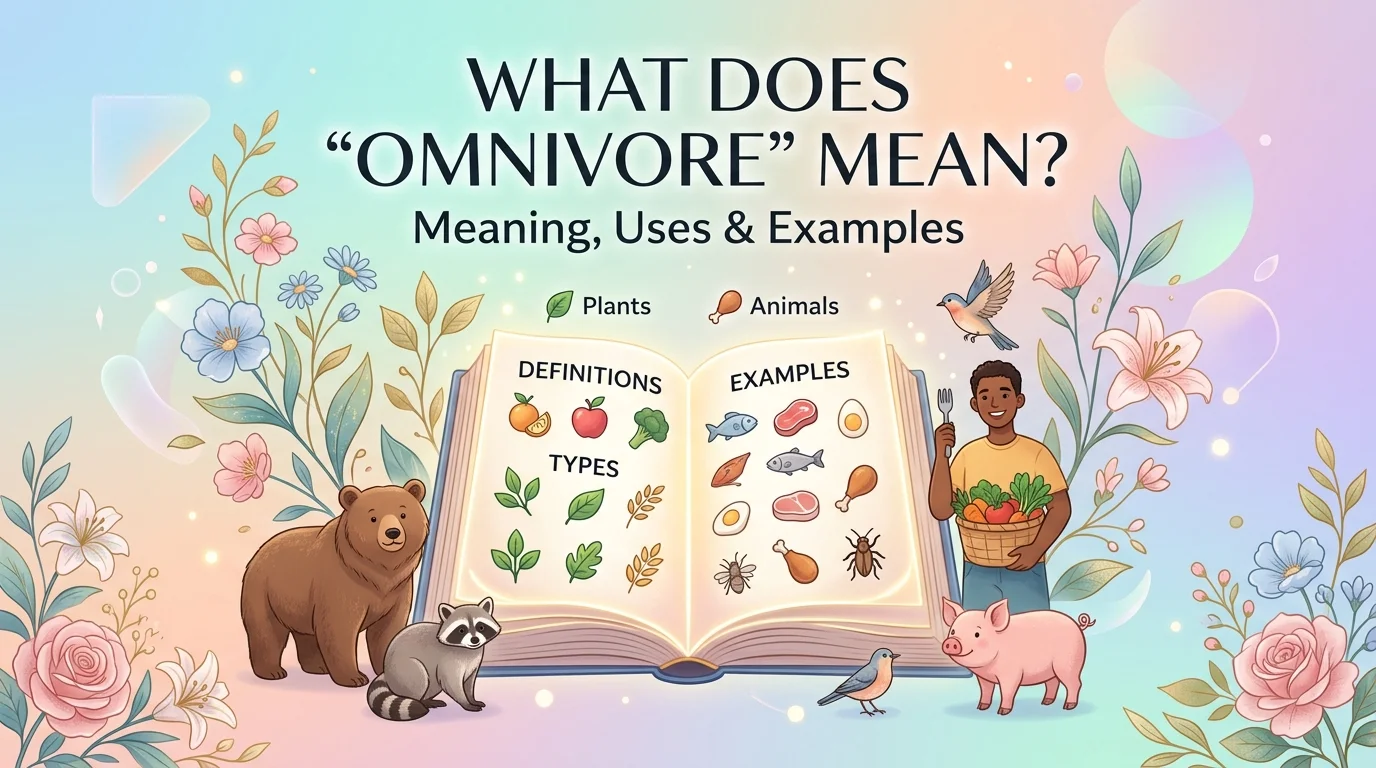
What Does “Omnivore” Mean?
Quick Definition
An omnivore is:
A living thing that eats both plants and animals.
The word describes a mixed diet.
Literal Meaning of Omnivore
The word comes from:
- Omni = all
- Vore = eating
So, omnivore means:
“One that eats many kinds of food.”
What Does Omnivore Mean in Biology?
In biology, an omnivore is an organism that gets nutrients from both:
- Plant sources
- Animal sources
This allows it to survive in different environments.
Characteristics of an Omnivore
Mixed Diet
Omnivores eat a combination of foods.
Examples:
- Fruits
- Vegetables
- Seeds
- Meat
- Insects
Adaptable Eating Habits
Many omnivores can change their diet depending on what food is available.
Example:
A bear may eat berries in one season and fish in another.
Different Teeth Types
Many omnivores have teeth suited for both:
- Cutting meat
- Grinding plants
Examples of Omnivores
Humans
Humans are commonly classified as omnivores because they can consume:
- Plants
- Meat
- Dairy
- Other animal products
Bears
Many bears eat:
- Berries
- Fish
- Insects
- Small animals
Pigs
Pigs can eat:
- Plants
- Roots
- Insects
- Small animals
Chickens
Chickens eat:
- Seeds
- Plants
- Insects
Raccoons
Raccoons have varied diets including:
- Fruits
- Eggs
- Insects
- Small animals
Omnivore Meaning in the Food Chain
In ecosystems, omnivores play an important role because they can act as both:
- Consumers of plants
- Predators of animals
They help maintain balance by interacting with different parts of the food web.
Difference Between Omnivores, Herbivores, and Carnivores
| Type | Diet | Examples |
|---|---|---|
| Omnivore | Plants and animals | Humans, bears, pigs |
| Herbivore | Plants only | Cows, deer, rabbits |
| Carnivore | Mostly animals | Lions, wolves, eagles |
Omnivore Meaning in Humans
Humans are often described as omnivores because the human digestive system can process a wide range of foods.
Human diets may include:
- Fruits
- Vegetables
- Grains
- Meat
- Fish
- Dairy products
However, individual eating choices vary.
Origin and History of Omnivore
The word “omnivore” comes from Latin roots meaning “all” and “to eat.”
Scientists use the term to classify animals based on their feeding behavior and role in ecosystems.
The concept has been used in biology for many years to understand animal diets and survival strategies.
How People Actually Use Omnivore
You will often see omnivore used in:
- Biology classes
- Animal discussions
- Environmental studies
- Nutrition conversations
Example:
“Is a bear a carnivore?”
“No, it is an omnivore because it eats plants and animals.”
Real Examples of Omnivore in Conversations
Example 1: Animal Question
Person A:
“What does a bear eat?”
Person B:
“A bear is an omnivore.”
Meaning:
It eats both plants and animals.
Example 2: Human Diet
Person A:
“Do humans eat only plants?”
Person B:
“No, humans are generally omnivores.”
Meaning:
Humans eat different types of food.
Example 3: School Science
Person A:
“What is an omnivore?”
Person B:
“An animal that eats plants and meat.”
Meaning:
A mixed diet.
Example 4: Nature Discussion
Person A:
“Why can this animal survive in many places?”
Person B:
“Because it is an omnivore.”
Meaning:
It can eat different foods.
Common Mistakes and Misunderstandings
Mistake 1: Thinking Omnivores Eat Equal Amounts of Plants and Meat
Omnivores can have different diets. They do not always eat the same amount of each.
Mistake 2: Thinking Every Animal That Eats Meat Is a Carnivore
Some animals eat meat occasionally but are still classified as omnivores.
Mistake 3: Thinking Omnivore Only Applies to Animals
The term is mainly used for organisms, especially animals.
Similar Terms and Related Words
| Term | Meaning | Difference |
|---|---|---|
| Herbivore | Plant-eating organism | Eats plants only |
| Carnivore | Meat-eating organism | Eats animals mainly |
| Consumer | Organism that gets energy by eating | Broader category |
| Predator | Animal that hunts others | Focuses on hunting |
| Scavenger | Animal that eats dead animals | Different feeding method |
| Plant eater | Eats vegetation | Informal term |
| Food chain | System of energy transfer | Ecosystem concept |
Is Omnivore Positive, Negative, or Neutral?
Omnivore is neutral.
It is a scientific classification, not a judgment.
Positive example:
“Omnivores adapt well to changing environments.”
Neutral example:
“Humans are omnivores.”
Should You Use Omnivore?
Use It If:
- Talking about animal diets
- Explaining biology
- Describing mixed eating habits
Avoid It If:
- A more specific term is needed
Example:
A cow is better described as a herbivore, not an omnivore.
Related posts:
 What Does “Sleep Paralysis Meaning” Mean? Powerful Explanation, Symptoms, Causes & Real Life Examples 2026
 Canvas Meaning Explained The Amazing Truth Behind Its Art, Design, Tech & Everyday Uses 2026
 Drab Meaning Explained Powerful Definition, Examples, Uses & Complete Guide 2026
 Democratic Meaning Made Easy Complete Guide to Fair Government & Democracy 2026