

What Does “Subsidiary” Mean?
Quick Definition
A subsidiary is:
A company that is controlled by another company.
The controlling company is called the:
- Parent company
- Holding company
- Corporate owner
Literal Meaning of Subsidiary
The word comes from the idea of being “supporting” or “secondary.”
In business, it describes a company that operates under the control of a larger organization.
What It Usually Means in Business
Example:
“Company A owns Company B as a subsidiary.”
Meaning:
Company A controls Company B.
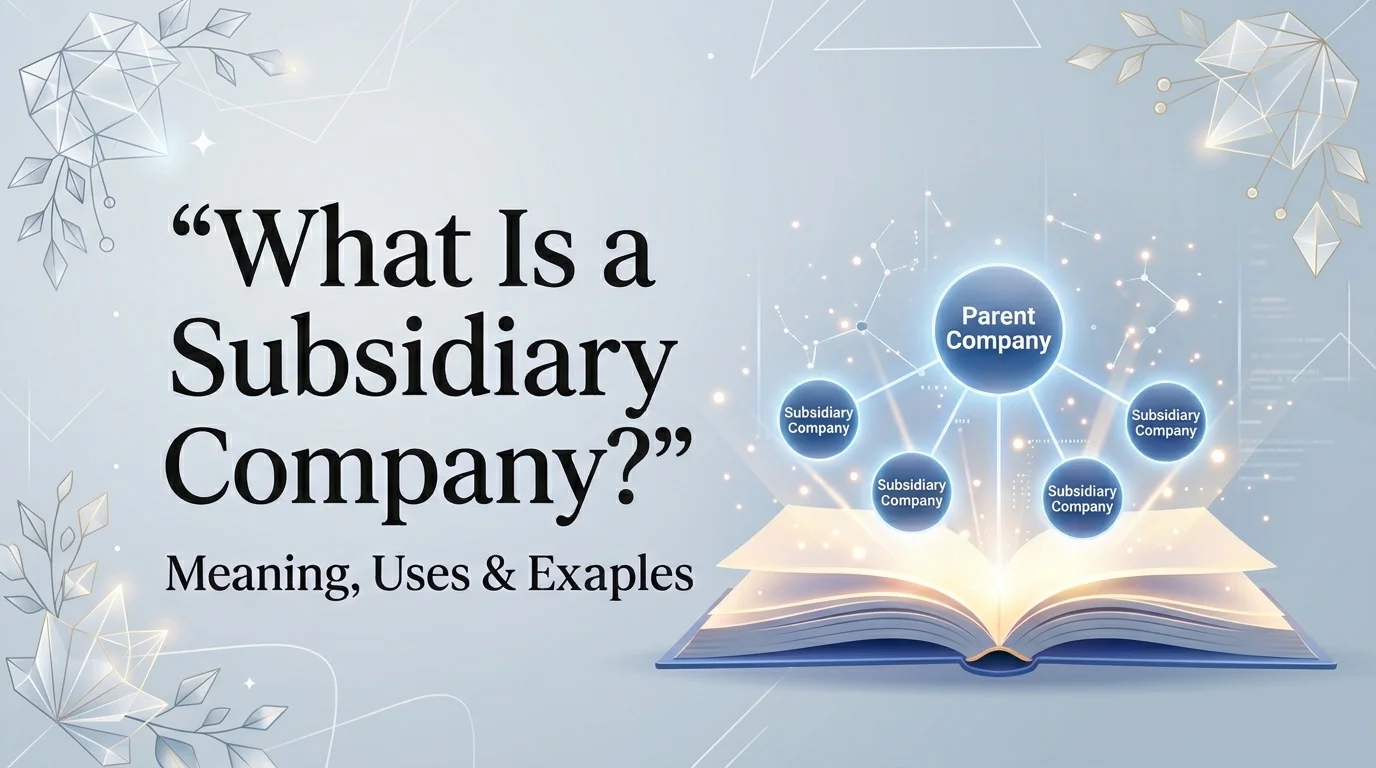
What Is a Subsidiary Company?
A subsidiary company is a separate legal business that usually has:
- Its own name
- Its own employees
- Its own operations
- Its own financial records
However, it is controlled by another company.
How Does a Subsidiary Work?
A parent company may control a subsidiary through:
- Ownership of shares
- Voting rights
- Management influence
- Strategic decisions
The subsidiary may still run daily operations independently.
Example:
A technology company owns a gaming company.
The gaming company operates separately but follows the parent company’s overall direction.
Types of Subsidiaries
Wholly Owned Subsidiary
A wholly owned subsidiary means the parent company owns 100% of the subsidiary.
Example:
A company creates a new business division and owns the entire company.
Majority-Owned Subsidiary
A majority-owned subsidiary means the parent company owns more than half of the shares.
This usually gives control over decisions.
Partly Owned Subsidiary
A parent company owns a significant portion but not all of the company.
Other investors may also own shares.
Subsidiary Meaning in Finance
In finance, subsidiaries appear in:
- Investment reports
- Annual reports
- Business analysis
Investors look at subsidiaries to understand how a company operates and earns money.
Subsidiary Meaning in Everyday Language
People may use subsidiary to describe something connected to a larger organization.
Example:
“This brand is a subsidiary of a major company.”
Meaning:
The brand belongs to a bigger company.
Origin and History of Subsidiary
The word “subsidiary” comes from Latin roots related to support or assistance.
Over time, it developed into a business term describing companies controlled by larger organizations.
Modern corporations use subsidiaries as part of global business strategies.
How People Actually Use Subsidiary
You will often see subsidiary in:
- Business news
- Stock market discussions
- Company websites
- Legal documents
- Financial reports
When to Use It
Use subsidiary when discussing:
- Company ownership
- Corporate structures
- Business relationships
Example:
“The brand became a subsidiary of the company.”
When Not to Use It
Avoid using subsidiary when you simply mean:
- Partner
- Customer
- Employee
- Supplier
A subsidiary involves ownership or control.
Real Examples of Subsidiary in Conversations
Example 1: Company Ownership
Person A:
“Who owns that brand?”
Person B:
“It is a subsidiary of a larger company.”
Meaning:
A bigger company controls it.
Example 2: Business News
Person A:
“Why did the company buy that business?”
Person B:
“They wanted a new subsidiary.”
Meaning:
They wanted to add another controlled company.
Example 3: Corporate Structure
Person A:
“Is this a separate company?”
Person B:
“Yes, but it is a subsidiary.”
Meaning:
It is legally separate but controlled by another company.
Example 4: Investment
Person A:
“Why does the report mention many companies?”
Person B:
“They are subsidiaries.”
Meaning:
They are businesses owned by the main company.
Common Mistakes and Misunderstandings
Mistake 1: Thinking a Subsidiary Is Just a Department
A subsidiary is usually a separate legal company, not just a department.
Mistake 2: Thinking Subsidiaries Are Always Small
Some subsidiaries are very large companies.
Mistake 3: Confusing Subsidiary With Partner
A partner may work with a company, but a subsidiary is controlled by ownership.
Similar Terms and Related Words
| Term | Meaning | Difference |
|---|---|---|
| Parent company | Company that controls another company | Opposite of subsidiary |
| Holding company | Company that owns other companies | Focuses on ownership |
| Affiliate | Connected company | May involve less control |
| Branch | Part of a company | Not usually separate legally |
| Division | Internal business unit | Not separate company |
| Corporation | Large business entity | General term |
| Partner | Independent business relationship | No ownership required |
| Acquisition | Buying another company | Process of gaining control |
Is Subsidiary Positive, Negative, or Neutral?
Subsidiary is generally neutral.
Positive:
“The subsidiary helped the company expand.”
Negative:
“The subsidiary faced financial problems.”
Neutral:
“The company owns several subsidiaries.”
Should You Use Subsidiary?
Use It If:
- Talking about business ownership
- Explaining company structures
- Discussing corporate relationships
Avoid It If:
- A simpler word like “branch” is more accurate
Related posts:
 What Does “Sleep Paralysis Meaning” Mean? Powerful Explanation, Symptoms, Causes & Real Life Examples 2026
 Canvas Meaning Explained The Amazing Truth Behind Its Art, Design, Tech & Everyday Uses 2026
 Drab Meaning Explained Powerful Definition, Examples, Uses & Complete Guide 2026
 Democratic Meaning Made Easy Complete Guide to Fair Government & Democracy 2026