
What Does “If Applicable” Mean?
Quick Definition
“If applicable” means “if it is relevant,” “if it applies to you,” or “only when necessary.” It tells the reader to complete an action only if the information fits their specific situation.
Simple definition:
- Complete this step only if it relates to you.
- Skip it if it doesn’t apply.
- Write “N/A” (Not Applicable) if required.
What It Usually Means in Forms and Documents
You’ll most often see this phrase when additional information is only needed for certain people.
Examples include:
- Enter your middle name, if applicable.
- Include your spouse’s information, if applicable.
- Upload your work permit, if applicable.
- Provide your previous employer’s details, if applicable.
In each case, only people who meet that condition need to respond.
What Tone Does It Convey?
The phrase has a neutral and professional tone.
It is commonly used in:
- Official forms
- Business emails
- Government documents
- School applications
- Medical paperwork
- User instructions
Unlike casual phrases, it isn’t funny, sarcastic, or emotional. It’s simply a clear way to avoid unnecessary instructions.
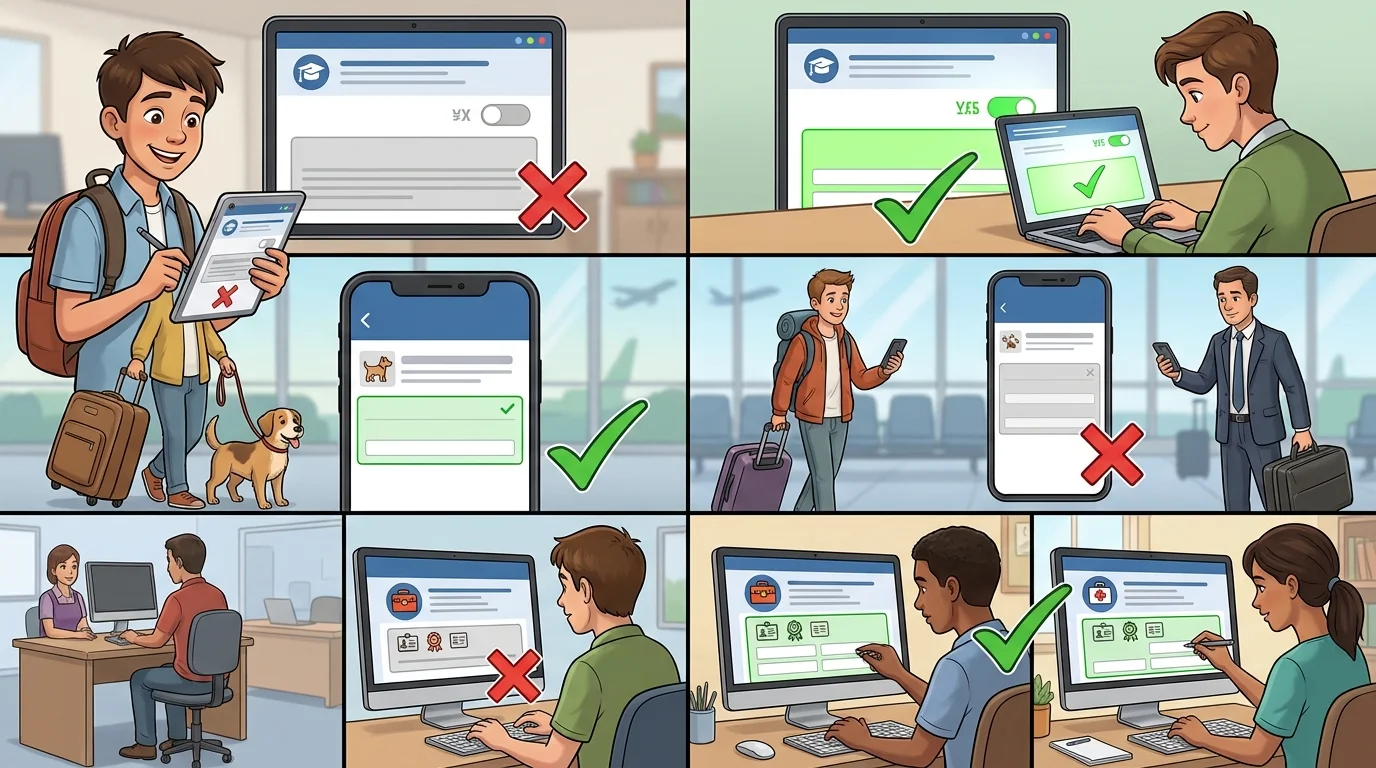
What Does “If Applicable” Mean on Different Platforms?
Text Messages
People rarely use “if applicable” in casual text messages because it sounds formal. However, it may appear when someone is sharing instructions.
Example:
“Bring your student ID if applicable.”
Business emails often include this phrase.
Example:
“Please attach your portfolio, if applicable.”
Workplace Communication
Managers and HR teams frequently use it when not every employee needs to complete the same task.
Example:
“Submit travel receipts, if applicable.”
Online Forms
Government agencies, universities, and employers commonly use this phrase to prevent unnecessary answers.
Example:
“Previous visa information (if applicable).”
Websites
Online checkout pages and registration forms often include optional fields marked “if applicable.”
Legal Documents
Contracts and agreements use the phrase to specify conditions that only apply in certain situations.
Example:
“Enter your company registration number, if applicable.”
Social Media
The phrase is uncommon on platforms like Instagram or TikTok unless someone is giving instructions or creating educational content.
Origin and History of “If Applicable”
The phrase comes from the verb “apply,” meaning “to be relevant” or “to relate to a particular situation.”
Unlike internet slang, “if applicable” did not originate on social media or in online communities. It has been used in formal English for many decades in business, legal, academic, and government writing.
Because it provides concise instructions, it became a standard phrase in forms, contracts, and official documents. There is no single known creator or exact first recorded use.
How People Actually Use “If Applicable”
Most people use this phrase when they don’t know whether a particular instruction will apply to everyone.
You’ll often see it in situations like:
- Job applications
- College admissions
- Visa applications
- Tax forms
- Insurance claims
- Employee onboarding
- Medical questionnaires
- Product manuals
When to Use It
Use “if applicable” when:
- Not everyone has the same circumstances.
- Some information is optional.
- A step only applies to certain people.
- You want to avoid confusing instructions.
When Not to Use It
Avoid using it:
- In casual conversations with friends.
- When everyone must complete the same task.
- If the instruction applies to all readers.
- When simpler wording would be clearer.
Real Examples of “If Applicable” in Conversations
Example 1
Person A: Do I need to upload my passport?
Person B: Only if applicable.
Meaning: Upload it only if the requirement applies to you.
Example 2
Person A: Should I include my previous employer?
Person B: Yes, if applicable.
Meaning: Include it only if you’ve had previous employment.
Example 3
Person A: The form asks for my spouse’s information.
Person B: Fill it out if applicable.
Meaning: Only married applicants need to answer.
Example 4
Person A: What should I write if I don’t have children?
Person B: Leave it blank or write N/A if applicable.
Meaning: The section doesn’t apply to you.
Example 5
Person A: Should I attach my certifications?
Person B: Yes, if applicable.
Meaning: Include them only if you have relevant certifications.
Example 6
Person A: The instructions mention a visa number.
Person B: That’s only if applicable.
Meaning: Not everyone has one.
Example 7
Person A: Do freelancers complete this section?
Person B: Only if applicable to your work.
Meaning: Complete it only if it matches your situation.
Example 8
Person A: Should students answer this question?
Person B: Yes, if applicable.
Meaning: Only students for whom the question is relevant.
Example 9
Person A: Do I need to list military service?
Person B: If applicable.
Meaning: Only if you’ve served.
Example 10
Person A: Can I skip optional questions?
Person B: Yes, if they aren’t applicable.
Meaning: Skip anything that doesn’t relate to you.
Common Mistakes and Misunderstandings
Many people misunderstand this phrase because they think every field must be completed.
Common mistakes include:
- Filling out sections that don’t apply.
- Leaving required fields blank by mistake.
- Assuming “if applicable” means “optional” in every case.
- Entering incorrect information just to avoid leaving a space empty.
To avoid mistakes:
- Read the full instruction carefully.
- Determine whether the question relates to your situation.
- If instructed, write “N/A” instead of leaving the field blank.
- Follow any additional instructions provided on the form.
Similar Terms and Related Expressions
| Expression | Meaning | Difference |
|---|---|---|
| If relevant | Only when related | Less formal |
| If necessary | Only when needed | Focuses on necessity |
| If required | Only when required | Indicates a requirement |
| As needed | When needed | More flexible |
| Optional | Not mandatory | Doesn’t always depend on circumstances |
| N/A (Not Applicable) | Does not apply | Used as a response |
| Where appropriate | Suitable in the situation | Common in formal writing |
| If needed | When necessary | More conversational |
| Where relevant | Applies to the topic | Often used in reports |
| When applicable | Whenever it applies | Similar meaning with different wording |
Is “If Applicable” Positive, Negative, or Neutral?
The phrase is completely neutral.
It doesn’t express emotion, opinion, or judgment.
Instead, it simply tells readers:
- Complete this if it applies.
- Ignore it if it doesn’t.
Its purpose is to make instructions clearer and shorter.
Should You Use “If Applicable”?
Yes, especially in professional writing.
Use it if:
- You’re writing forms.
- You’re creating instructions.
- You’re sending business emails.
- Different readers have different situations.
Avoid it if:
- You’re chatting casually with friends.
- Everyone must complete the same action.
- Simpler wording would be easier to understand.
Related posts:
 What Does “The Hierophant Meaning” Mean? Powerful Tarot Symbolism, Spiritual Insight & Life Guidance 2026
 Nolan Name Meaning Explained Amazing Guide to Origin, History, Personality & Symbolism 2026
 Beautiful Charlotte Meaning What Does Charlotte Mean, Origin, Personality & More 2026
 Posterity Meaning Explained The Best Guide to Its Definition & Examples 2026