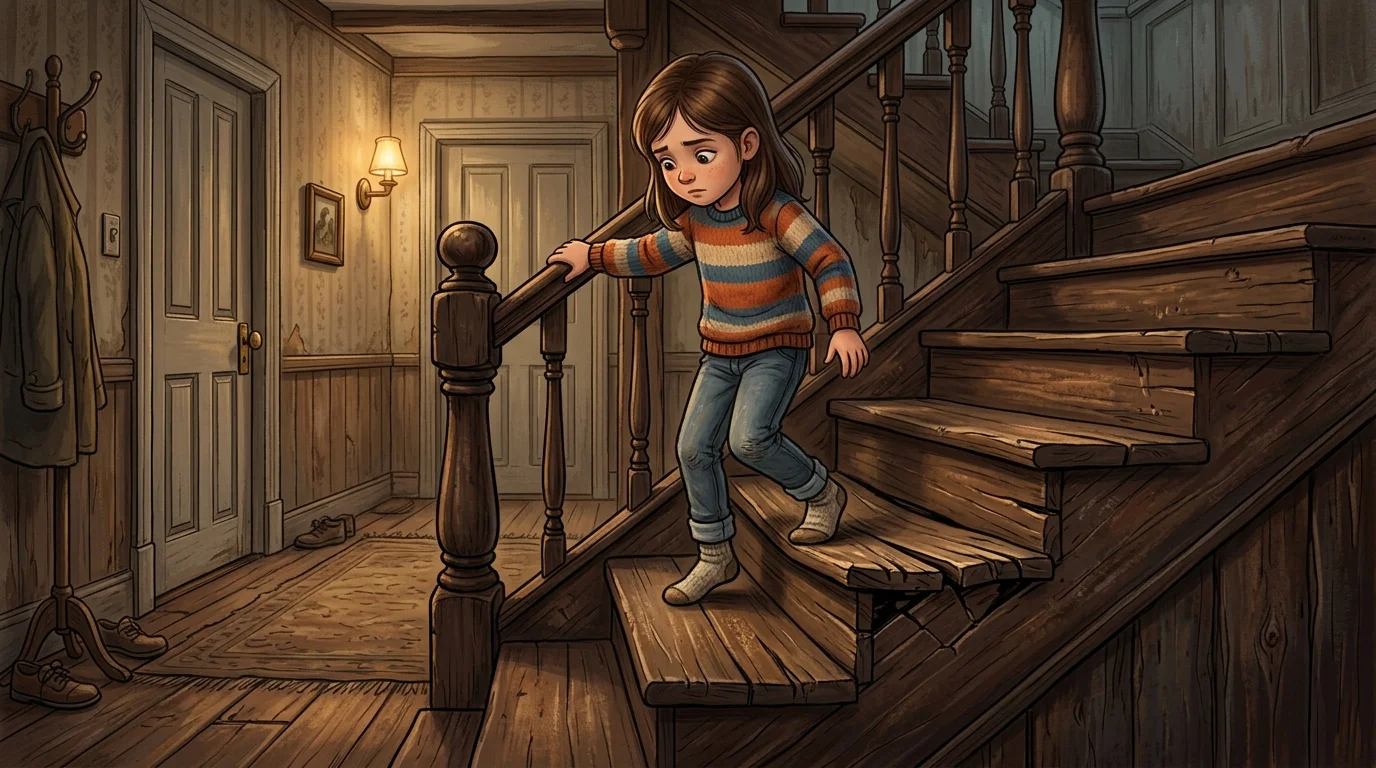
Creak Meaning Definition and Explanation
Quick Definition
Creak means to make or produce a sharp, squeaking, or groaning sound caused by movement or pressure.
As a noun, it refers to that squeaking sound itself.
What Does Creak Usually Mean?
People use creak to describe sounds made by:
- Wooden doors.
- Floorboards.
- Stairs.
- Furniture.
- Beds.
- Tree branches.
- Ships.
- Gates.
- Old buildings.
- Sometimes even human joints.
For example:
“The old door creaked when I opened it.”
This means the door made a squeaky sound while moving.
What Tone Does It Convey?
The word creak is usually neutral, but the feeling it creates depends on the context.
It can suggest:
- Age.
- Mystery.
- Quietness.
- Tension.
- Wear and tear.
- Old-fashioned charm.
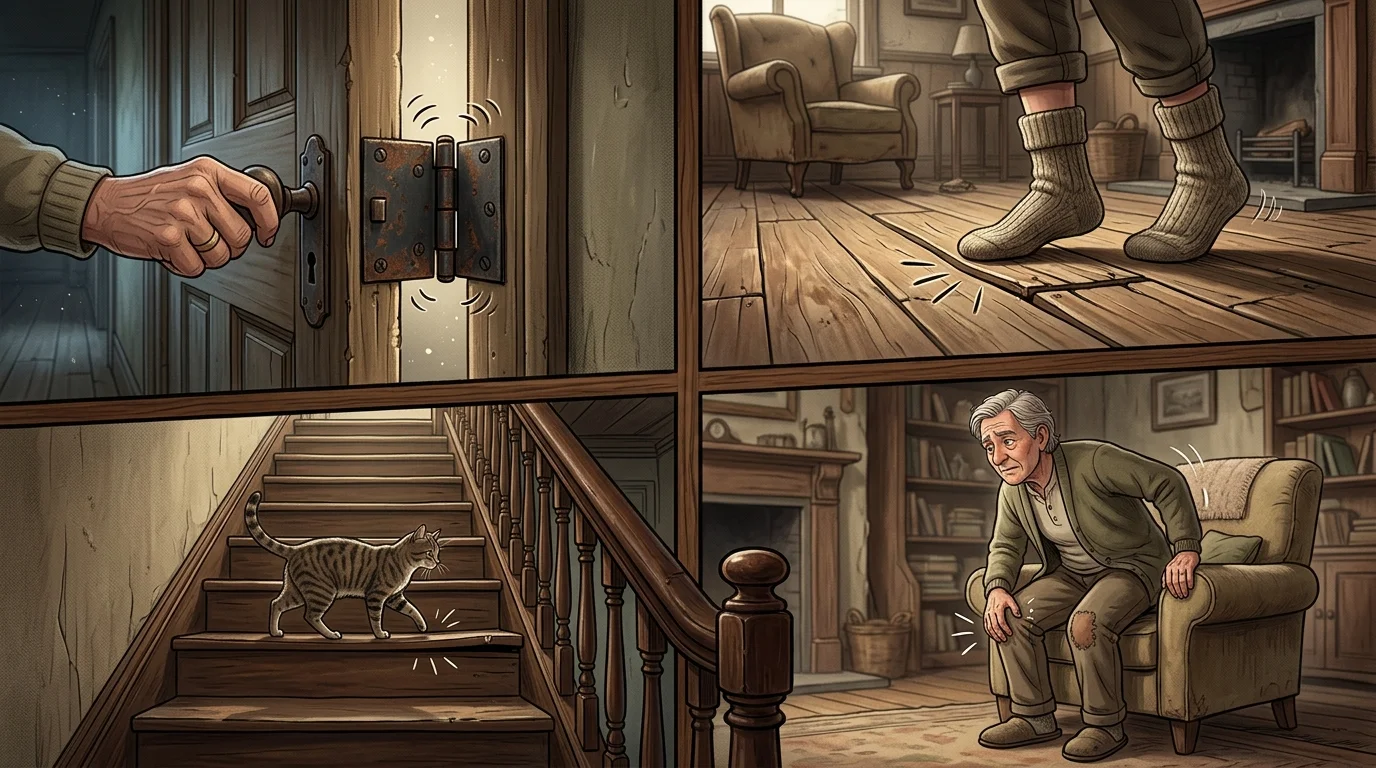
Creak Meaning in Different Contexts
Home
Doors, cabinets, stairs, and floors often creak as they age or when they move.
Example:
“The wooden staircase creaked with every step.”
Furniture
Old chairs, beds, and tables may creak when weight is applied.
Nature
Trees and branches can creak in strong winds.
Example:
“The branches creaked during the storm.”
Vehicles
Older ships, boats, and wagons may creak while moving.
Human Body
People sometimes say their knees, back, or joints creak as they get older.
Example:
“My knees creak after a long hike.”
Literature and Movies
Authors often use creak to build suspense or describe eerie settings.
Example:
“The door creaked open slowly.”
Origin and History of Creak
The word creak comes from Middle English and has Germanic roots. It has been used for centuries to imitate the squeaking or groaning sounds produced by moving wood, metal, and similar materials.
Because it closely resembles the sound it describes, creak is considered an example of onomatopoeia—a word that sounds like the noise it represents.
How People Actually Use Creak
Most people use creak when describing sounds caused by movement.
You’ll often hear it in conversations about:
- Old houses.
- Furniture.
- Weather.
- Horror movies.
- Home maintenance.
- Aging joints.
- Boats and ships.
When to Use It
Use creak when something produces a squeaky or groaning sound because of movement or pressure.
When Not to Use It
Avoid using creak for sounds like:
- Explosions.
- Ringing phones.
- Animal cries.
- Loud crashes.
- Electronic beeps.
Real Examples of Creak in Conversations
Example 1
Person A: Did you hear that?
Person B: It was just the floor creaking.
Meaning: The floor made a squeaky sound.
Why it was used: Describing a house.
Example 2
Person A: Why is the door so noisy?
Person B: The hinges creak.
Meaning: They make a squeaking sound.
Why it was used: Home maintenance.
Example 3
Person A: That chair sounds old.
Person B: It creaks every time someone sits down.
Meaning: It squeaks under pressure.
Why it was used: Furniture discussion.
Example 4
Person A: The movie was scary.
Person B: The creaking door made it even creepier.
Meaning: The sound added suspense.
Why it was used: Horror scene.
Example 5
Person A: Why are the trees so noisy?
Person B: They’re creaking in the wind.
Meaning: The branches are rubbing and bending.
Why it was used: Weather conversation.
Example 6
Person A: My bed makes strange noises.
Person B: It probably creaks because it’s old.
Meaning: It squeaks when moved.
Why it was used: Furniture issue.
Example 7
Person A: Why do your knees make noise?
Person B: They creak sometimes after exercising.
Meaning: The joints make slight sounds.
Why it was used: Health discussion.
Example 8
Person A: Was someone outside?
Person B: No, it was just the gate creaking.
Meaning: The gate made a squeaky noise.
Why it was used: Identifying a sound.
Example 9
Person A: The ship sounded old.
Person B: You could hear the wood creak.
Meaning: The wooden structure made groaning sounds.
Why it was used: Boat description.
Example 10
Person A: Why did everyone stop talking?
Person B: The stairs creaked loudly.
Meaning: The staircase made a noticeable squeak.
Why it was used: Quiet setting.
Common Mistakes and Misunderstandings
People sometimes confuse creak with other sound-related words.
Common mistakes include:
- Using creak for loud crashing noises.
- Confusing creak with crack.
- Thinking only doors can creak.
- Using it for electronic sounds.
Remember, creak specifically describes a squeaky or groaning sound caused by movement.
Similar Words and Related Terms
| Word | Meaning | Difference |
|---|---|---|
| Squeak | High-pitched sound | Usually shorter and sharper |
| Groan | Low, strained sound | Often deeper than a creak |
| Crack | Sharp breaking sound | Indicates snapping or splitting |
| Crunch | Crushing sound | Different type of noise |
| Rattle | Rapid shaking sound | Produced by loose objects |
| Chirp | Bird or electronic sound | Not caused by movement of objects |
| Whine | High-pitched continuous sound | Different source |
| Moan | Long, low sound | Usually from people or wind |
| Rustle | Soft sound from leaves or fabric | Lighter than a creak |
| Creaking | Continuous form of creak | Ongoing squeaking noise |
Is Creak Positive, Negative, or Neutral?
The creak meaning is generally neutral.
Whether it has a positive or negative feeling depends on the context. In a horror story, a creak may create suspense. In an old home, it may simply add character and charm.
Should You Use Creak?
Use creak if:
- You’re describing a squeaky sound.
- You’re writing about old buildings or furniture.
- You’re explaining noises caused by movement.
- You want vivid, descriptive language.
Avoid it if:
- The sound is a bang, crack, buzz, or beep.
- You’re describing sounds unrelated to movement or pressure.
Related posts:
 What Does “The Hierophant Meaning” Mean? Powerful Tarot Symbolism, Spiritual Insight & Life Guidance 2026
 711 Meaning Explained The Powerful Truth Behind Its Spiritual, Text & Hidden Meanings 2026
 Nolan Name Meaning Explained Amazing Guide to Origin, History, Personality & Symbolism 2026
 Beautiful Charlotte Meaning What Does Charlotte Mean, Origin, Personality & More 2026