Lemmings Meaning What Does Lemmings Mean?
Quick Definition
Lemmings are small rodents found in northern regions, and the word can also refer to people who follow others without thinking independently.
Simple meaning:
Lemmings are Arctic rodents, but the term is often used to describe blind followers.
Literal Meaning of Lemmings
Lemmings are:
- Small mammals
- Rodents
- Native to Arctic and sub-Arctic areas
- Related to voles and muskrats
They live in tundra environments and feed mainly on grasses, mosses, and other plants.
Figurative Meaning
When someone calls a group “lemmings,” they usually mean:
- People following a crowd
- Individuals copying others without questioning decisions
This usage is metaphorical and sometimes considered critical or insulting.
What Tone Does It Convey?
The figurative use of lemmings is often:
Negative:
Suggesting a lack of independent thinking.
Neutral:
When referring to the actual animal.
What Does Lemmings Mean in Different Contexts?
Animal Context
Lemmings are wild rodents that play an important role in Arctic ecosystems.
They serve as prey for animals such as:
- Arctic foxes
- Snowy owls
- Weasels
Everyday Conversations
People sometimes say:
“They’re acting like lemmings.”
Meaning:
They are following others without thinking for themselves.
Politics and Social Commentary
Writers may use “lemmings” to criticize group behavior or herd mentality.
Business
The term may describe companies or investors who simply copy competitors instead of making independent decisions.
Gaming
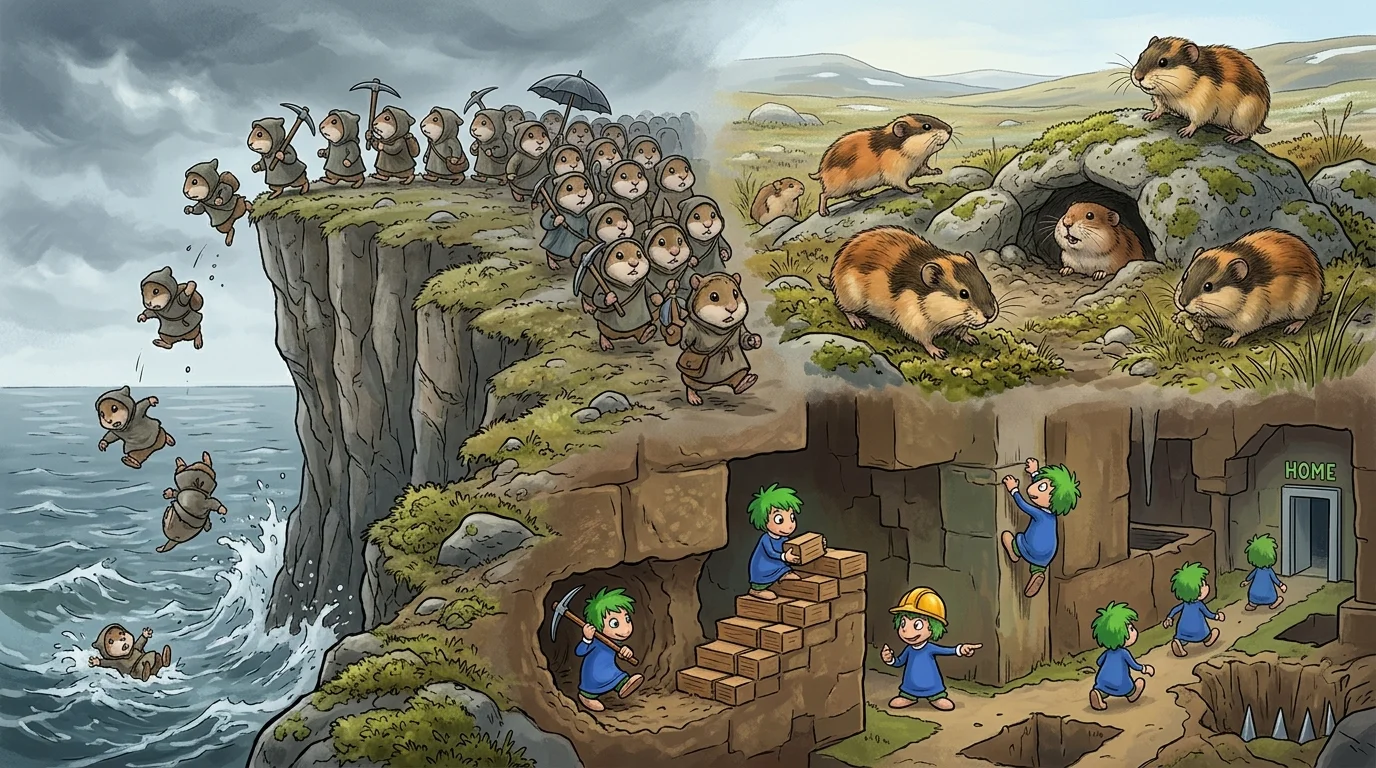
“Lemmings” is also the title of a classic puzzle video game in which players guide groups of tiny characters safely through obstacles.
Origin and History of Lemmings
The word lemming comes from Scandinavian languages and has been used for centuries to describe these Arctic rodents.
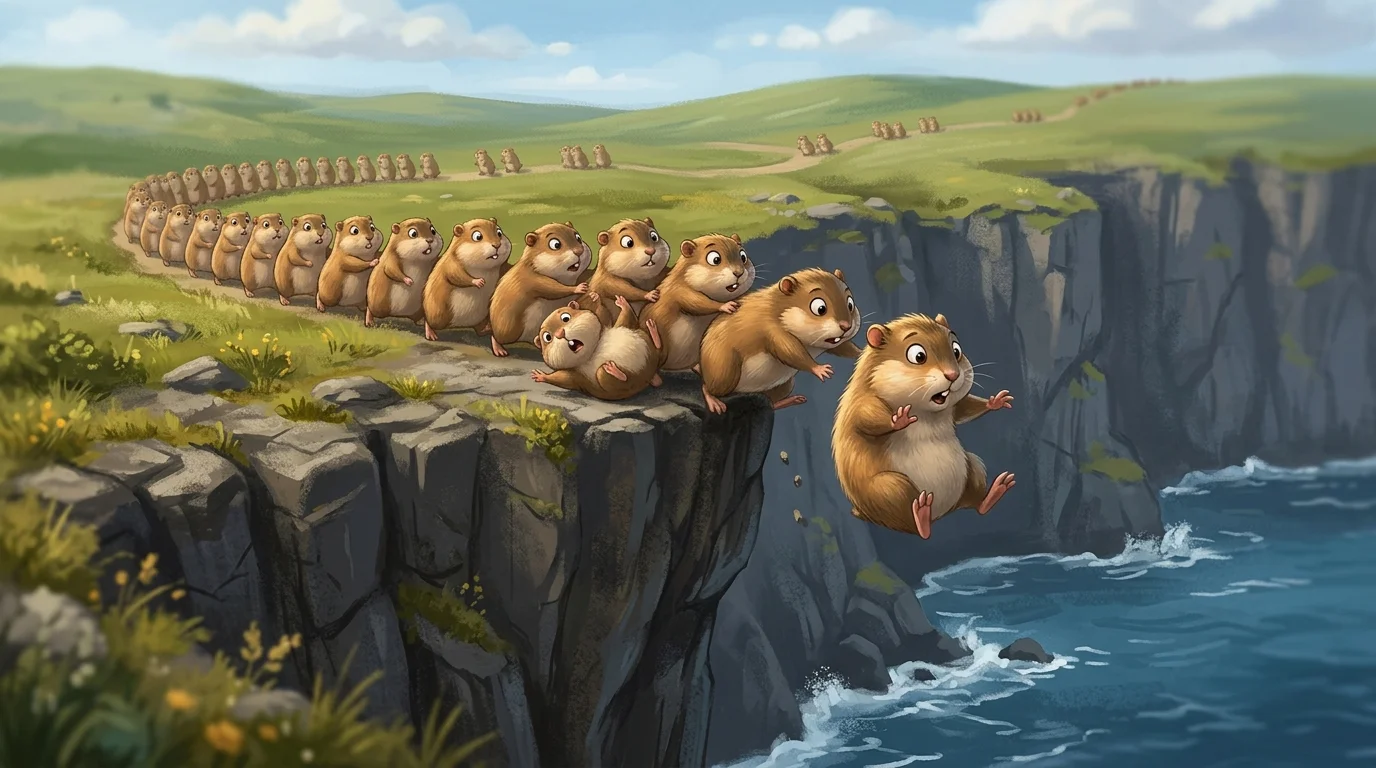
The myth that lemmings intentionally jump off cliffs became widely known after a 1958 nature documentary staged scenes that falsely suggested mass suicide. Scientists have since clarified that lemmings do not deliberately jump to their deaths.
Instead, some may accidentally drown or fall while migrating in search of food or new habitats.
How People Actually Use Lemmings
People use the word in two main ways:
Referring to the Animal
Example:
“We saw lemmings during our Arctic wildlife tour.”
Referring to Group Behavior
Example:
“Don’t be a lemming—think for yourself.”
This encourages independent thinking.
Real Examples of Lemmings in Conversations
Example 1: Animal Discussion
Person A:
“What are lemmings?”
Person B:
“They’re small Arctic rodents.”
Meaning:
They are discussing the actual animal.
Why it was used:
To identify the species.
Example 2: Social Behavior
Person A:
“Everyone bought the product just because it was trending.”
Person B:
“They acted like lemmings.”
Meaning:
They followed the crowd without much thought.
Why it was used:
To criticize herd behavior.
Example 3: Investing
Person A:
“Many investors copied the market.”
Person B:
“They became financial lemmings.”
Meaning:
They followed others without independent analysis.
Why it was used:
To describe imitation.
Example 4: School
Person A:
“Everyone copied the same answer.”
Person B:
“They were acting like lemmings.”
Meaning:
They followed others instead of thinking independently.
Why it was used:
To describe copying behavior.
Example 5: Wildlife
Person A:
“Do lemmings really jump off cliffs?”
Person B:
“No, that’s a common myth.”
Meaning:
They are correcting misinformation.
Why it was used:
To explain scientific facts.
Common Mistakes and Misunderstandings
Mistake 1: Believing Lemmings Commit Mass Suicide
This is a myth. Scientists have found no evidence that lemmings intentionally jump off cliffs to die.
Mistake 2: Thinking the Figurative Meaning Is Always Appropriate
Calling people “lemmings” can sound insulting because it suggests they lack independent judgment.
Mistake 3: Assuming Lemmings Are Aggressive
Lemmings are generally small wild rodents focused on survival.
Mistake 4: Confusing Lemmings With Mice
Although similar in appearance, lemmings are a distinct type of rodent.
Similar Terms and Related Words
| Term | Meaning | Difference |
|---|---|---|
| Herd mentality | Following the crowd | Focuses on group behavior |
| Blind follower | Someone who copies others | Informal description |
| Copycat | Someone who imitates others | Less critical |
| Follower | Someone who follows | Neutral term |
| Conformist | Someone who follows social norms | Broader social meaning |
| Rodent | Small gnawing mammal | Animal classification |
| Vole | Small rodent related to lemmings | Different species |
| Crowd follower | Person influenced by others | Everyday expression |
Are Lemmings Positive, Negative, or Neutral?
The word lemmings can be:
Neutral:
When referring to the animal.
Negative:
When describing people who blindly follow others.
The tone depends entirely on the context.
Should You Use the Word Lemmings?
Use the term if:
- You’re discussing the animal.
- You’re accurately describing herd behavior in an appropriate context.
Avoid using it if:
- It may insult someone unnecessarily.
- A more respectful description would better fit the situation.
Related posts:
 What Does “The Hierophant Meaning” Mean? Powerful Tarot Symbolism, Spiritual Insight & Life Guidance 2026
 711 Meaning Explained The Powerful Truth Behind Its Spiritual, Text & Hidden Meanings 2026
 Nolan Name Meaning Explained Amazing Guide to Origin, History, Personality & Symbolism 2026
 Powerful Meaning of Medusa Tattoo Symbolism, History & Hidden Messages 2026