What Does “Succulent” Mean?
Quick Definition
Succulent means:
- A plant that stores water in its tissues
- Something juicy, tender, or full of moisture
Literal Meaning of Succulent
The word comes from Latin succus, meaning “juice” or “sap.”
It connects to the idea of something containing a lot of liquid.
What It Usually Means in Different Contexts
Plant context:
“This is a succulent.”
Meaning:
It is a water-storing plant.
Food context:
“The steak was succulent.”
Meaning:
The steak was juicy and tender.
What Does Succulent Mean in Plants?
A succulent is a plant that stores water inside its:
- Leaves
- Stems
- Roots
This adaptation helps it survive in places where water is limited.
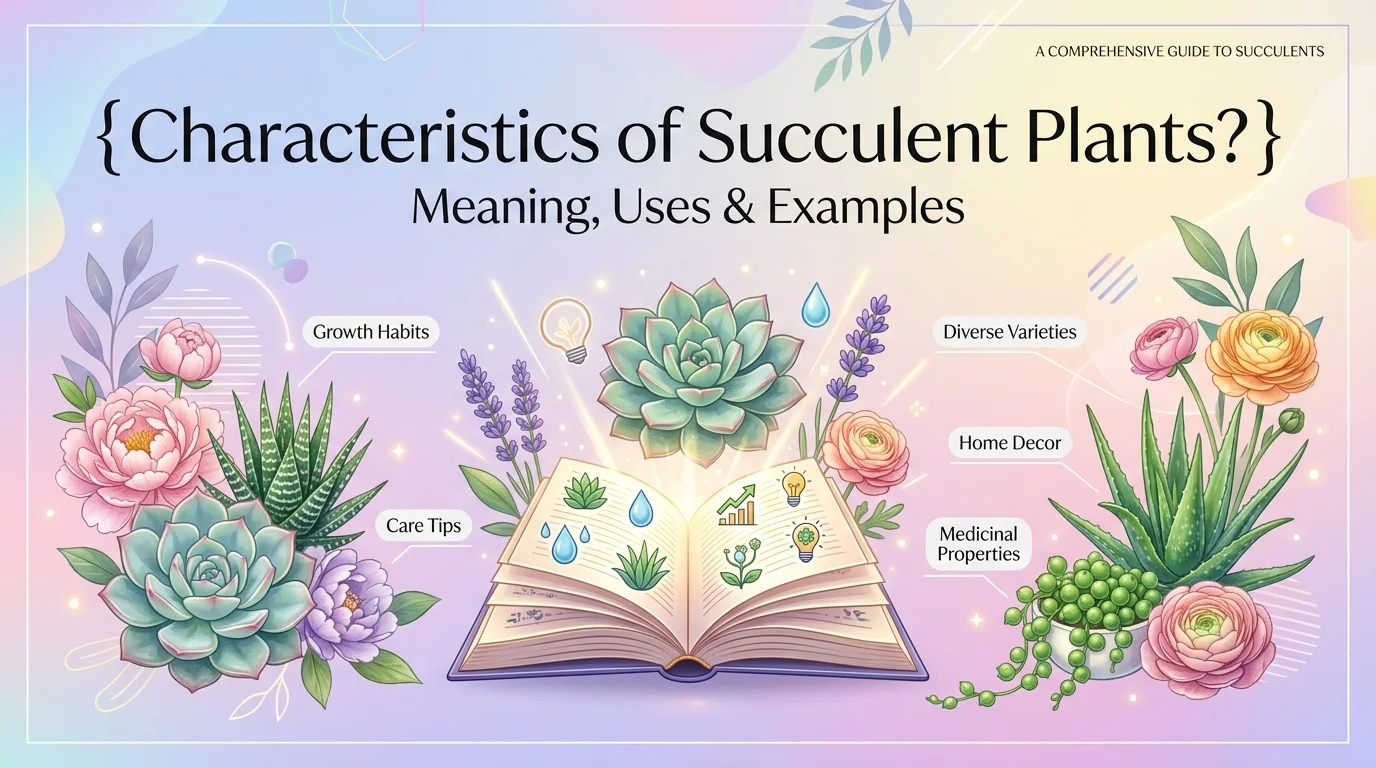
Characteristics of Succulent Plants
Thick Leaves
Many succulents have thick leaves that hold water.
Example:
Aloe vera stores moisture in its leaves.
Water Storage
Succulents can survive longer periods without frequent watering.
Drought Adaptation
They are designed for dry environments.
Low Maintenance
Many people keep succulents because they are relatively easy to care for.
Examples of Succulent Plants
Aloe Vera
A popular succulent known for its thick, gel-filled leaves.
Cactus
Many cacti are succulents because they store water.
Echeveria
A decorative succulent with a rose-like shape.
Jade Plant
A common houseplant with thick, shiny leaves.
Snake Plant
Often considered a drought-tolerant succulent-like plant.
Succulent Meaning in Gardening
In gardening, succulent refers to a category of plants that need special care.
Common care tips include:
- Avoid overwatering
- Provide enough sunlight
- Use well-draining soil
Succulent Meaning in Food
When describing food, succulent means:
- Juicy
- Tender
- Flavorful
- Moist
Examples:
“The chicken was succulent.”
Meaning:
The chicken was juicy and well-cooked.
“The fruit was succulent.”
Meaning:
The fruit was full of juice.
Succulent Meaning in Everyday Language
People may use succulent as a compliment.
Examples:
“That meal looks succulent.”
Meaning:
The food looks delicious.
“That fruit is succulent.”
Meaning:
The fruit is juicy and tasty.
Succulent Meaning in Symbolism
Succulents are often associated with:
- Strength
- Endurance
- Growth
- Protection
- Resilience
Because they survive harsh conditions, many people see them as symbols of persistence.
Origin and History of Succulent
The word succulent comes from Latin and originally described things full of juice or sap.
Over time, it became widely used in botany to describe plants with water-storing abilities.
Today, succulents are popular worldwide as indoor plants and decorative garden plants.
How People Actually Use Succulent
You will often see succulent used in:
- Gardening
- Home decoration
- Food descriptions
- Nature discussions
When to Use It
Use succulent when describing:
- Water-storing plants
- Juicy food
- Something rich and appealing
When Not to Use It
Avoid using succulent when describing:
- Any ordinary plant
- Dry or tough food
Real Examples of Succulent in Conversations
Example 1: Plant Discussion
Person A:
“What plant is that?”
Person B:
“It’s a succulent.”
Meaning:
It is a water-storing plant.
Example 2: Food Description
Person A:
“How was the meal?”
Person B:
“The chicken was succulent.”
Meaning:
The chicken was juicy and tender.
Example 3: Gardening
Person A:
“Why do you like succulents?”
Person B:
“They’re easy to care for.”
Meaning:
They require less maintenance.
Example 4: Shopping
Person A:
“I want a small indoor plant.”
Person B:
“Try a succulent.”
Meaning:
A small, easy-care plant option.
Example 5: Nature
Person A:
“How does this plant survive the desert?”
Person B:
“It stores water like a succulent.”
Meaning:
It has water-saving adaptations.
Common Mistakes and Misunderstandings
Mistake 1: Thinking All Succulents Are Cacti
Cacti are succulents, but not all succulents are cacti.
Mistake 2: Thinking Succulents Need No Water
They need water, just less frequently.
Mistake 3: Thinking Succulent Only Describes Plants
The word can also describe juicy food.
Similar Terms and Related Words
| Term | Meaning | Difference |
|---|---|---|
| Cactus | Water-storing plant with spines | A type of succulent |
| Plant | General living organism | Broader category |
| Drought-resistant | Able to survive dry conditions | Focuses on survival |
| Juicy | Full of liquid | Food-related meaning |
| Tender | Soft and easy to chew | Food texture |
| Lush | Rich and healthy growth | More about appearance |
| Tropical | Related to warm climates | Different plant category |
Is Succulent Positive, Negative, or Neutral?
Succulent is usually positive.
Positive:
“The dessert was succulent and delicious.”
Neutral:
“This is a succulent plant.”
The word often suggests something appealing or desirable.
Should You Use Succulent?
Use It If:
- Describing a water-storing plant
- Complimenting juicy food
- Talking about gardening
Avoid It If:
- A simpler word is more accurate
Example:
Use “juicy” instead of succulent if describing a basic drink.
Related posts:
 Powerful Bodhisattva Meaning Explained What Does Bodhisattva Mean in Buddhism? 2026
 Kurwa Meaning Explained The Surprising Truth Behind This Popular Slang & Swear Word 2026
 Subsequently Meaning Explained Powerful Definition, Examples, Uses & Complete Guide 2026
 Gypped Meaning Explained Essential Guide to the True Definition, Origin & Modern Usage 2026