What Does “Sulking” Mean?
Quick Definition
Sulking means:
Being quietly upset or unhappy while showing your feelings through silence or withdrawn behavior.
Literal Meaning of Sulking
The word refers to a visible mood or attitude where someone acts unhappy without openly discussing the reason.
What It Usually Means in Conversations
If someone says:
“He is sulking.”
It usually means:
“He is upset and acting quiet or distant.”
What Tone Does Sulking Convey?
Sulking usually has a negative or slightly critical tone.
Emotional
It can show:
- Hurt feelings
- Disappointment
- Frustration
Childlike
Sometimes people use sulking to describe behavior that seems immature.
Example:
“She is sulking because she didn’t get what she wanted.”
Serious
In relationships, sulking can describe someone avoiding communication.
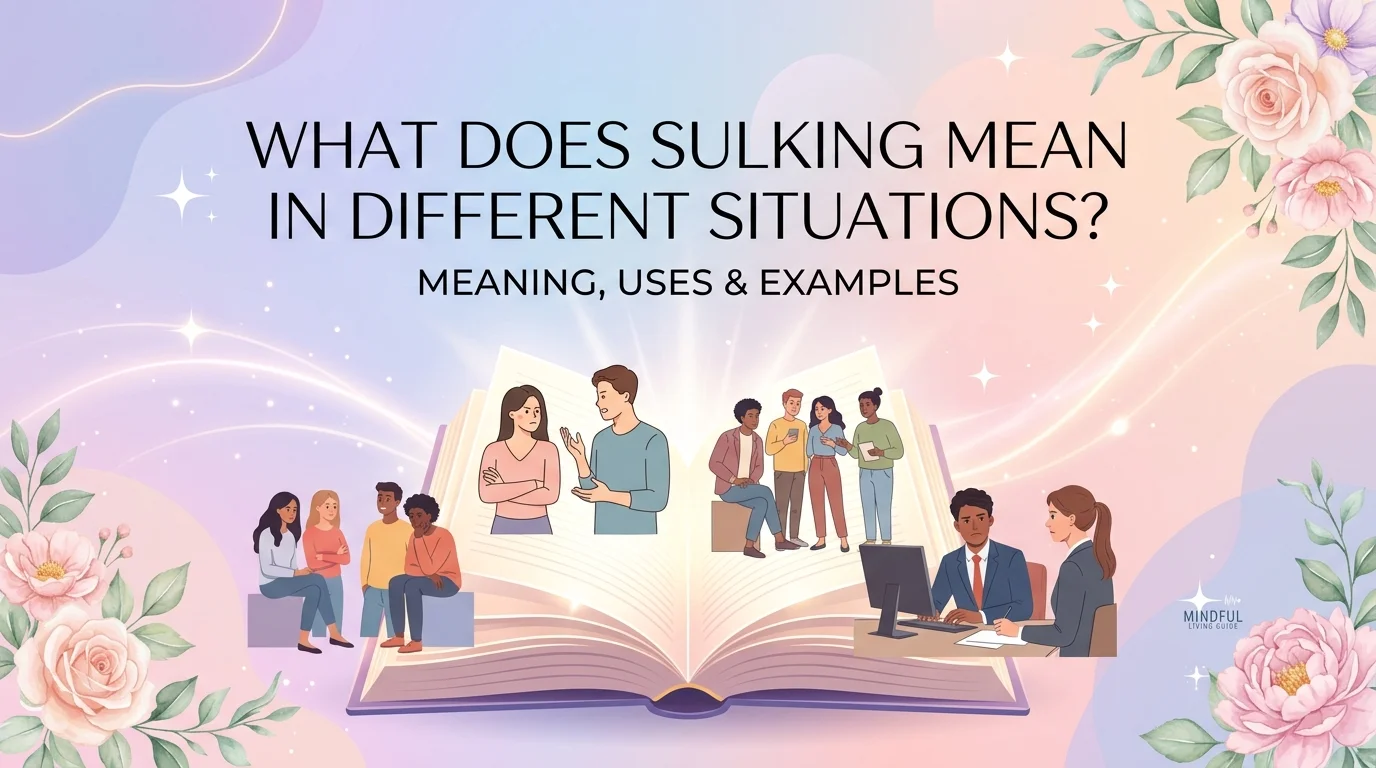
What Does Sulking Mean in Different Situations?
Sulking in Relationships
In relationships, sulking may happen when someone feels:
- Ignored
- Hurt
- Disappointed
- Unappreciated
Example:
“He stopped talking and started sulking after the argument.”
Meaning:
He was upset and withdrew.
Sulking in Text Messages
In texting, someone may appear to be sulking when they:
- Reply with short messages
- Stop responding
- Sound cold
Example:
“Are you sulking?”
Meaning:
“Are you upset and avoiding talking?”
Sulking in Children
Children often sulk when they are unhappy about something.
Example:
“The child was sulking because they couldn’t play.”
Meaning:
The child showed disappointment through quiet behavior.
Sulking at Work
Adults can also sulk at work.
Example:
“Don’t sulk after receiving feedback.”
Meaning:
Do not withdraw or act upset instead of responding positively.
Origin and History of Sulking
The word “sulk” has been used in English for centuries to describe a gloomy, withdrawn mood.
Over time, it became associated with people who show unhappiness by becoming quiet, distant, or uncooperative.
Today, sulking is commonly used in everyday conversations about emotions and behavior.
How People Actually Use Sulking
People usually use sulking when describing someone who is upset but not communicating directly.
You’ll often see it in:
- Family conversations
- Relationship discussions
- Movies and books
- Everyday speech
When to Use It
Use sulking when someone is:
- Quiet because they are upset
- Acting withdrawn
- Showing disappointment indirectly
Example:
“He has been sulking all day.”
When Not to Use It
Avoid using sulking if someone is simply:
- Thinking quietly
- Tired
- Busy
Being quiet does not always mean someone is sulking.
Real Examples of Sulking in Conversations
Example 1: Friends
Person A:
“Why isn’t Sarah talking?”
Person B:
“She’s sulking because we canceled plans.”
Meaning:
Sarah is upset and withdrawn.
Example 2: Relationship
Person A:
“What’s wrong?”
Person B:
“Nothing.”
Person A:
“You’re sulking, aren’t you?”
Meaning:
You seem upset but are not saying why.
Example 3: Family
Person A:
“Why is your brother sitting alone?”
Person B:
“He’s sulking after the argument.”
Meaning:
He is upset and quiet.
Example 4: Workplace
Person A:
“Why is he acting differently?”
Person B:
“He’s sulking after the criticism.”
Meaning:
He is reacting emotionally.
Example 5: Casual Use
Person A:
“Stop sulking and join us.”
Meaning:
Stop being upset and participate.
Common Mistakes and Misunderstandings
Mistake 1: Thinking Sulking Means Crying
Sulking is usually about quiet withdrawal, not necessarily crying.
Mistake 2: Thinking Sulking Always Means Anger
A person can sulk because of sadness, disappointment, or hurt feelings.
Mistake 3: Confusing Sulking With Being Quiet
Not everyone who is quiet is sulking.
Similar Terms and Related Words
| Term | Meaning | Difference |
|---|---|---|
| Pouting | Showing annoyance through facial expression | Often more visible |
| Brooding | Thinking deeply about something negative | More internal |
| Moody | Having changing emotions | Broader meaning |
| Upset | Feeling unhappy | General emotion |
| Withdrawn | Keeping away from others | Less focused on emotion |
| Grumpy | Irritable or annoyed | More about mood |
| Angry | Feeling strong displeasure | Stronger emotion |
Is Sulking Positive, Negative, or Neutral?
Sulking is usually negative.
Negative:
“He is sulking instead of explaining the problem.”
Neutral:
“The child was sulking after losing the game.”
The word often suggests that communication would be better.
Should You Use Sulking?
Use It If:
- Describing someone’s withdrawn behavior
- Talking about emotions
- Explaining a reaction
Avoid It If:
- You are unsure why someone is quiet
- You do not want to sound judgmental
Related posts:
 Powerful Bodhisattva Meaning Explained What Does Bodhisattva Mean in Buddhism? 2026
 Kurwa Meaning Explained The Surprising Truth Behind This Popular Slang & Swear Word 2026
 Subsequently Meaning Explained Powerful Definition, Examples, Uses & Complete Guide 2026
 Gypped Meaning Explained Essential Guide to the True Definition, Origin & Modern Usage 2026