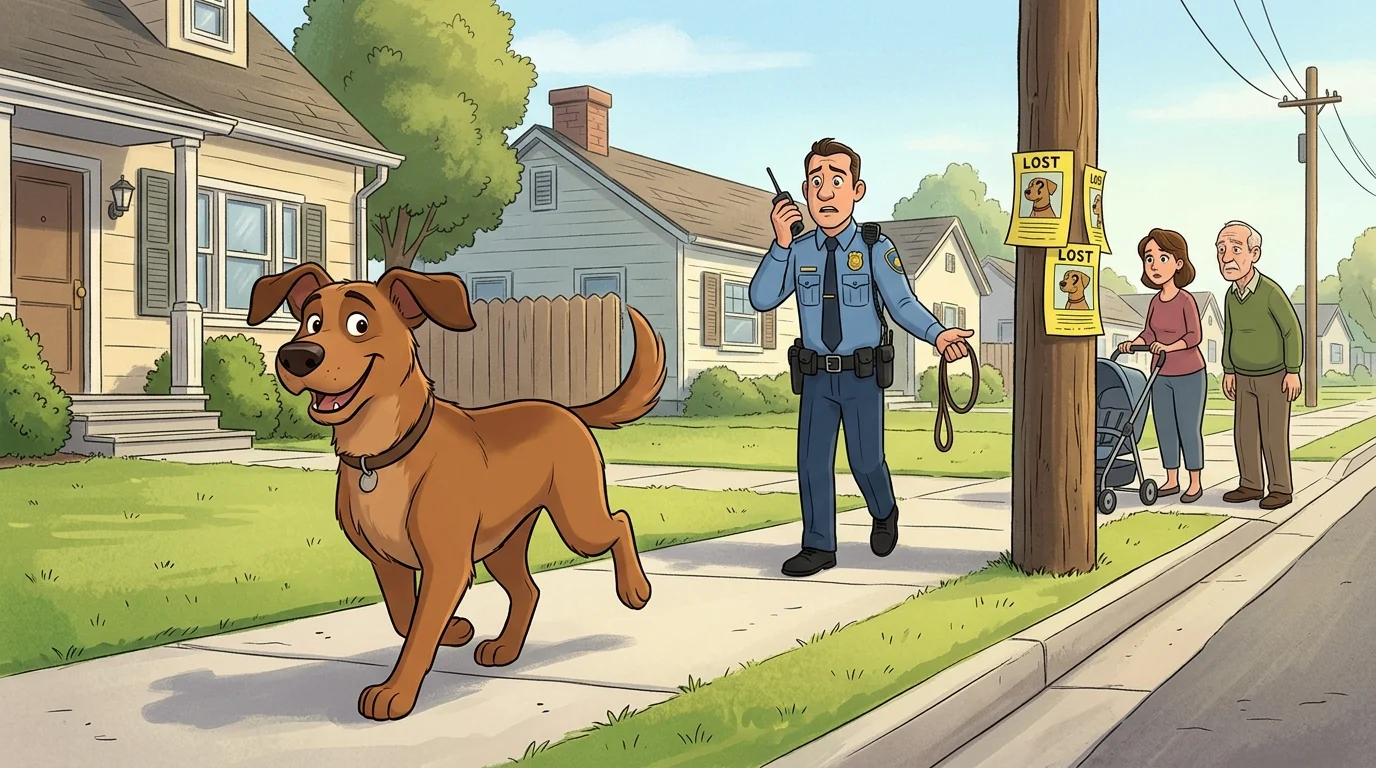
What Does “At Large” Mean?
Quick Definition
At large means:
- Free and not confined
- Not captured or arrested
- Moving about without restrictions
- Representing an entire group rather than a specific section
Primary Meaning
The most common meaning of at large is remaining free when someone is expected to be captured, controlled, or confined.
For example:
- The escaped prisoner is still at large.
- Police believe the suspect remains at large.
In these examples, the person has not yet been caught.
Literal Meaning
Historically, the phrase referred to someone or something moving freely without restraint.
Example:
- The horse was at large in the field.
Common Interpretation
Today, most people associate the phrase with news reports involving:
- Criminal suspects
- Escaped prisoners
- Missing individuals
- Uncontrolled animals

What Tone Does “At Large” Convey?
The tone depends on the context.
Serious
- The suspect remains at large.
Informative
- The committee member serves at large.
Concerned
- A dangerous animal is at large in the neighborhood.
Formal
The phrase is generally considered more formal than casual everyday language.
At Large Meaning in Different Contexts
News Reports
This is the most common use.
Example:
- Authorities confirmed that the robbery suspect is still at large.
Meaning:
The suspect has not been found or arrested.
Legal Context
In legal situations, at large means a person remains free rather than being in custody.
Example:
- The fugitive remained at large for several months.
Animals
The phrase can describe animals roaming freely.
Example:
- Residents reported a dog at large near the park.
Meaning:
The dog is not restrained or contained.
Politics and Organizations
In governance, at-large representatives serve an entire community rather than a specific district.
Example:
- She was elected as an at-large member of the board.
Meaning:
She represents the whole organization.
Business
Some companies use the term when discussing members or directors who represent the organization as a whole.
Origin and History of “At Large”
The phrase dates back several centuries and originates from older English usage.
Historically, at large meant:
- At liberty
- Free to move
- Not restricted
The term appeared in English writing as early as the Middle Ages. Over time, it became especially common in legal and governmental language.
Its original sense of “being free” remains the foundation of its modern meanings.
How People Actually Use “At Large”
Most people encounter the phrase through:
- Television news
- Newspapers
- Crime reports
- Political discussions
- Legal documents
You’ll often hear:
- “The suspect is still at large.”
- “The animal remains at large.”
- “An at-large representative was elected.”
When to Use It
Use the phrase when describing:
- Someone who has not been captured
- An animal roaming freely
- Representation of a whole group
When Not to Use It
Avoid using it as a replacement for:
- Randomly saying someone is outside
- Simply saying someone is free from work
- Informal descriptions of daily activities
Real Examples of “At Large” in Conversations
Example 1
Person A: Did they catch the thief?
Person B: No, he’s still at large.
Meaning: The thief has not been captured.
Example 2
Person A: Why is everyone talking about the neighborhood alert?
Person B: A dangerous dog is at large.
Meaning: The dog is roaming freely.
Example 3
Person A: Is the suspect in custody?
Person B: Not yet. Police say he’s at large.
Meaning: He remains free.
Example 4
Person A: Who does that board member represent?
Person B: She’s an at-large member.
Meaning: She represents everyone.
Example 5
Person A: Why are officers searching the area?
Person B: The escapee is still at large.
Meaning: The escapee hasn’t been found.
Example 6
Person A: Is the missing prisoner dangerous?
Person B: Yes, and he’s still at large.
Meaning: He remains free.
Example 7
Person A: Why was the school notified?
Person B: Because a wild animal is at large nearby.
Meaning: The animal is roaming freely.
Example 8
Person A: What does an at-large council member do?
Person B: They represent the whole city.
Meaning: Not tied to a specific district.
Example 9
Person A: Did authorities make an arrest?
Person B: The main suspect is still at large.
Meaning: No arrest has been made.
Example 10
Person A: Why are people locking their doors?
Person B: A burglary suspect remains at large.
Meaning: The suspect hasn’t been caught.
Common Mistakes and Misunderstandings
Mistake 1: Thinking It Means “Very Large”
Some people mistakenly believe at large refers to size.
Incorrect:
- The building is at large.
Correct:
- The building is very large.
Mistake 2: Confusing It with “In Charge”
These phrases have completely different meanings.
- At large = free/not confined
- In charge = responsible for something
Mistake 3: Using It Informally
The phrase sounds formal and may feel unusual in casual conversation.
Mistake 4: Assuming It Always Refers to Criminals
While often used for suspects, it can also refer to:
- Animals
- Representatives
- Organizations
Similar Terms and Related Expressions
| Term | Meaning | Difference |
|---|---|---|
| Free | Not restricted | More general |
| Loose | Not secured | Usually physical |
| Fugitive | Escaped person | Specifically avoiding capture |
| On the run | Escaping authorities | Informal |
| Escaped | Got away | Focuses on leaving confinement |
| Unrestrained | Not controlled | Broader meaning |
| At liberty | Free | More formal |
| Wanted | Sought by police | Doesn’t imply freedom |
| Roaming | Moving freely | Usually animals |
| Unconfined | Not enclosed | Physical restriction focus |
Is “At Large” Positive, Negative, or Neutral?
The phrase itself is generally neutral, but the context determines the tone.
Negative Examples
- A murder suspect is at large.
- A dangerous animal is at large.
Neutral Examples
- An at-large board member was elected.
Positive Examples
Positive uses are relatively uncommon because the phrase often appears in official reports.
Should You Use “At Large”?
Use It If
- You’re discussing news events.
- You’re writing formally.
- You’re describing a suspect who hasn’t been caught.
- You’re talking about organizational representation.
Avoid It If
- You’re writing casual text messages.
- Simpler wording would be clearer.
- The audience may not understand formal expressions.
Related posts:
 Discordant Meaning Explained Powerful Negative Word, Definition & Usage Guide 2026
 Bubba Meaning Revealed The Surprising Story Behind This Friendly Nickname 2026
 Chaser Meaning Explained Powerful Guide to Definition, Uses, Examples & Different Contexts 2026
 Powerful Meaning of Medusa Tattoo Symbolism, History & Hidden Messages 2026